

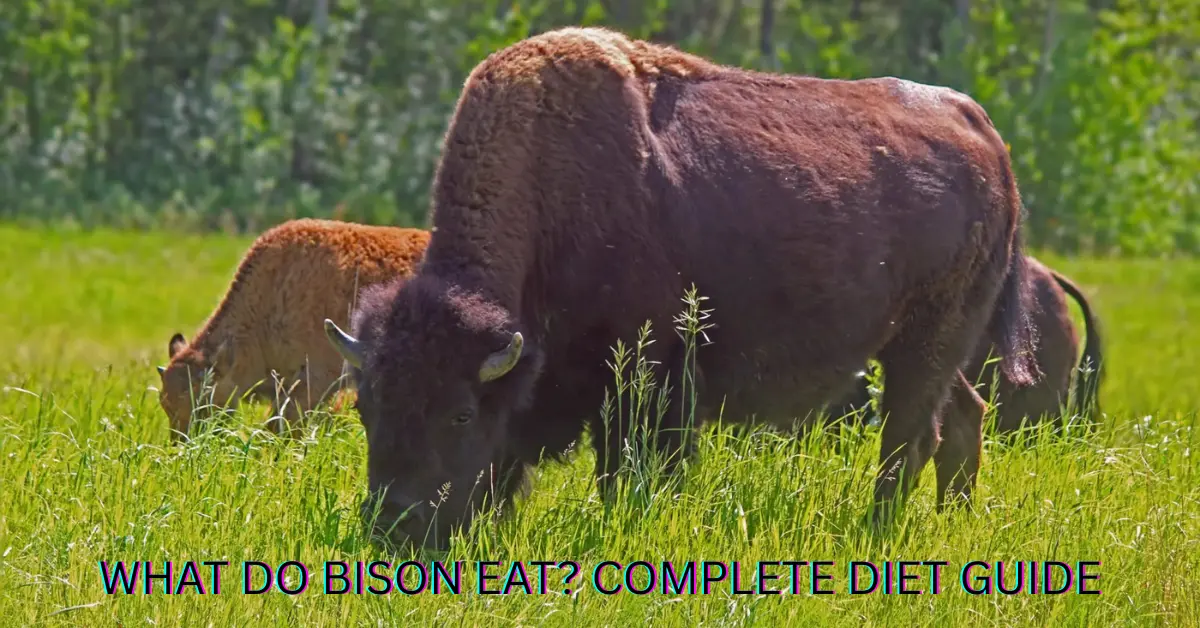
Bison are among the most iconic animals of North America. Massive, powerful, and resilient, they once roamed the continent in herds numbering in the tens of millions. Today, Yellowstone National Park protects the most important continuously wild bison population in the United States.
One of the most common questions people ask about these animals is simple but important:
what do bison eat?
The answer explains not only their diet, but also how they survive harsh winters, shape ecosystems, and thrive in landscapes where many other large animals struggle.
What Is a Bison’s Natural Diet?
Bison are herbivores, meaning they eat only plant-based foods. More specifically, they are grazers, not browsers.
More than 90 percent of a bison’s diet consists of:
- Grasses
- Sedges
- Other grass-like plants
These plants grow in open environments such as grasslands, prairies, valleys, and meadows. Unlike animals that depend on leaves or shrubs, bison rely on low-growing vegetation that can quickly regrow after grazing.
Do Bison Eat Anything Other Than Grass?
Yes, but only in small amounts.
In addition to grasses, bison sometimes eat:
- Forbs (broad-leaf plants and weeds)
- Browse (leaves, twigs, and stems of woody plants)
Together, these foods usually make up less than 5 percent of their total diet. Bison may eat them when grasses are scarce, buried under snow, or not yet available in early spring. Even then, grass remains their primary and preferred food.
Seasonal Changes in What Bison Eat
Bison eat grasses year-round, but how and where they feed changes with the seasons. Their feeding strategy is closely tied to plant growth, snow depth, and energy needs.
Bison Diet by Season (Quick Overview)
| Season | Main Foods | Feeding Style | Why It Matters |
| Spring | Fresh grasses, young sedges | Repeated grazing in the same areas | High-protein food helps bison recover after winter |
| Summer | Abundant grasses and sedges | Long daily grazing (9–11 hours) | Allows rapid weight gain and supports breeding |
| Fall | Mature, drying grasses | Increased feeding time | Builds fat reserves for winter survival |
| Winter | Dried grasses under snow | Sweep snow aside with head and hump | Access food when other grazers cannot |
Why This Seasonal Diet Is Important
Unlike deer or elk, bison do not rely heavily on following fresh plant growth. Instead, they create high-quality food by grazing the same areas repeatedly. This keeps grasses short, tender, and nutritious throughout much of the year.
How Do Bison Eat Grass Under Deep Snow?
One of the most remarkable things about bison is how they survive winter.
Bison have a large shoulder hump, which is made of powerful muscle—not fat. These muscles allow bison to:
- Swing their massive heads from side to side
- Push snow away from feeding areas
- Reach dried grasses buried beneath snow
This adaptation allows bison to remain in open landscapes even during deep winter conditions, while many other grazers struggle to find food.
How Much Do Bison Eat Each Day?
An adult bison can consume:
- 25 to 35 pounds (11–16 kg) of dry plant material per day
- Sometimes more during summer when food is abundant
Considering that adult males can weigh up to 2,000 pounds, this high intake is necessary to maintain body mass and energy.
How Bison Digest Their Food
Bison are ruminants, meaning they have a complex digestive system designed to process tough plant material.
Key Features of Bison Digestion
- A four-chambered stomach
- Specialized microorganisms (bacteria and protozoa)
- Ability to digest low-quality forage efficiently
Bison alternate between eating and ruminating, which involves regurgitating partially digested food and chewing it again. This process allows them to extract maximum nutrients from grasses that other animals cannot digest as effectively.
Because of this system, bison can survive on lower-quality forage better than cattle, deer, or elk.
What Do Yellowstone Bison Eat Specifically?
In Yellowstone National Park, bison feed on native plant species such as:
- Bluebunch wheatgrass
- Idaho fescue
- Western wheatgrass
- Sedges in wet meadows
During winter, bison often feed near hydrothermal areas, where warmer ground keeps vegetation exposed even when snow is deep. This natural advantage helps sustain Yellowstone’s large bison population year-round.
Do Bison Need Water Along With Their Food?
Yes. Bison drink water from:
- Rivers
- Streams
- Lakes
In winter, they may also consume snow to meet hydration needs. During spring and summer, much of their water intake comes directly from fresh, moisture-rich grasses.
What Do Baby Bison Eat?
Newborn bison calves rely entirely on their mother’s milk for the first few months of life.
By late summer:
- Calves begin grazing
- They gradually transition to grasses and sedges
- Milk continues to supplement their diet
Proper nutrition during the first year is critical, as calves must survive their first harsh winter.
How Bison Diet Shapes the Ecosystem
Bison are not just consumers of grass—they are ecosystem engineers.
Their grazing behavior:
- Stimulates new plant growth
- Prevents grasslands from turning into shrublands
- Improves soil fertility through nutrient recycling
- Creates habitat diversity for birds and small mammals
By grazing intensely in certain areas and then moving on, bison help maintain healthy and resilient grassland ecosystems.
Bison vs Other Grazers: What Makes Their Diet Unique?
Compared to animals like elk, deer, or cattle, bison:
- Digest lower-quality forage more efficiently
- Feed successfully in deeper snow
- Rely less on seasonal plant green-up
- Travel farther each year to access food
In Yellowstone, bison may travel up to 1,000 miles annually by repeatedly moving between feeding areas.
Do Wild Bison Need Human Feeding?
No.
Wild bison are fully capable of surviving without supplemental feeding. They have evolved over thousands of years to handle periods of scarcity, harsh winters, and fluctuating food quality.
In Yellowstone, bison are allowed to live as naturally as possible, which helps preserve their wild behavior and ecological role.
Why Understanding What Bison Eat Matters
Knowing what bison eat helps us understand:
- Why grasslands are essential ecosystems
- How wildlife and livestock conflicts arise
- Why large, connected landscapes are necessary
- How humans can coexist with migratory wildlife
Bison survival is not just about food—it is about space, movement, and respect for natural processes.
Final Thoughts
So, what do bison eat?
Primarily grasses and sedges—but their diet is only part of the story. How bison feed, how they digest tough plants, and how they adapt to extreme seasons explains why they have survived near extinction and made one of the greatest wildlife recoveries in history.
Understanding their diet gives us insight into the strength of nature—and our responsibility to protect it.
What do bison eat in the wild?
Bison eat grasses, sedges, and other grass-like plants. They graze in open grasslands and meadows year-round.Their diet is over 90% grass.
Where do bison live?
Bison live in grasslands, plains, and open valleys.They inhabit places like Yellowstone and protected reserves. Some herds also live on private ranches and tribal lands.
What do bison eat in ARK?
In ARK, bison eat berries as their main food source.They prefer berries like Amarberry and Mejoberry. Players use berries to tame and feed them.
Bison vs buffalo?
Bison live in North America and have a large shoulder hump. True buffalo live in Africa and Asia and lack that hump. People often say “buffalo,” but “bison” is the correct term.
What do bison eat in the winter?
Bison eat dried grasses buried under snow. They use their strong heads to push snow aside.
This skill helps them survive harsh winters.
What do bison eat in Yellowstone?
Yellowstone bison eat native grasses and sedges.They graze in valleys, meadows, and thermal areas. Grass remains their main food in every season.
Do bison eat meat?
No, bison do not eat meat. They are strict herbivores. They survive entirely on plant-based food.
What do bison eat in ARK Ascended?
In ARK Ascended, bison eat berries just like in ARK. Players feed them berries to keep them alive. They do not eat meat or crops in the game.