

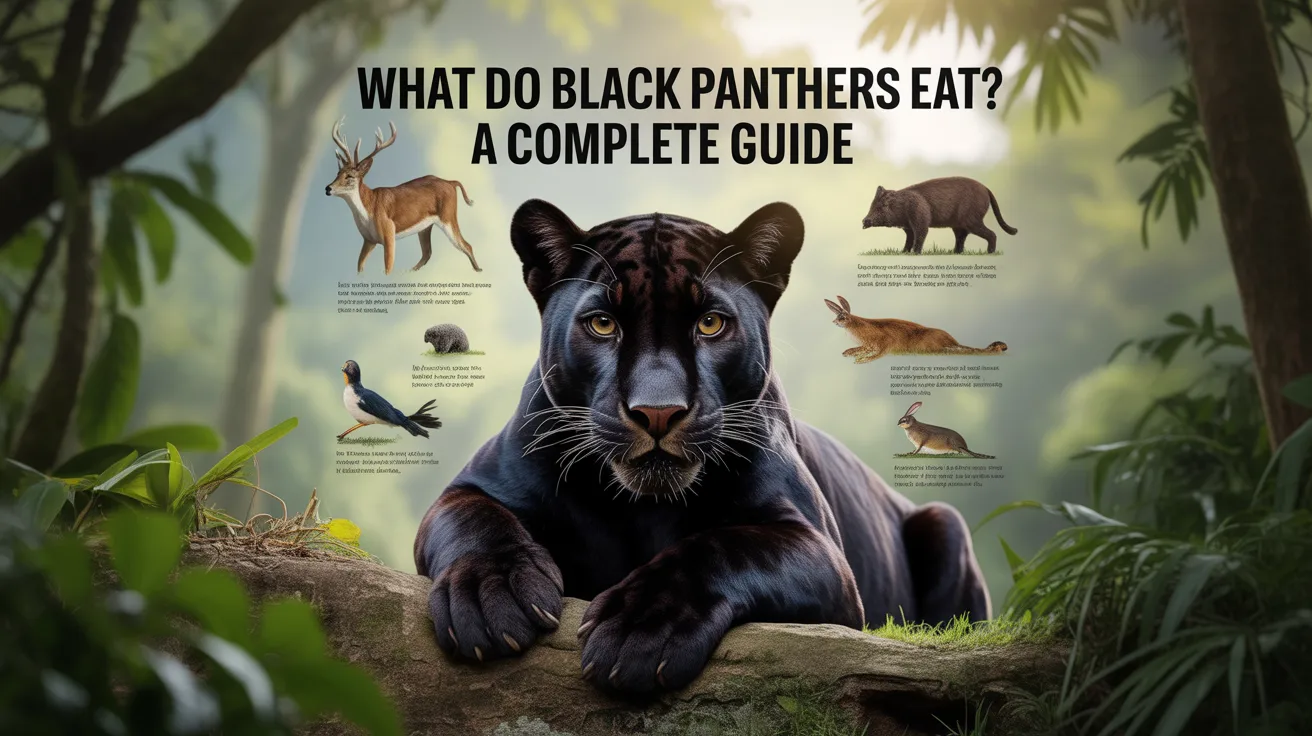
Black panthers are one of the most mysterious and captivating creatures in the wild. Known for their striking dark coats and stealthy hunting skills, these big cats have diets and habits that are both fascinating and vital to their survival. In this guide, we’ll explore what black panthers eat, their hunting strategies, environments, and practical tips for observing or understanding these elusive animals.
Understanding Black Panthers
Before diving into their diet, it’s important to clarify what a black panther is. The term “black panther” isn’t a species itself; it generally refers to:
- Melanistic leopards (Panthera pardus) – Found mainly in Asia and Africa.
- Melanistic jaguars (Panthera onca) – Found primarily in Central and South America.
Melanism is a genetic trait that gives these animals their dark fur, which helps them camouflage in dense forests and during nighttime hunts.
Typical Diet of Black Panthers
Black panthers are carnivorous predators, which means they primarily eat meat. Their diet can vary based on their habitat and the availability of prey.
Common Prey Includes:
- Ungulates – Deer, antelope, wild boar.
- Smaller mammals – Rabbits, monkeys, rodents.
- Birds – Ground-dwelling birds or small arboreal species.
- Reptiles – Occasionally snakes and lizards.
- Fish – Rarely, when other prey is scarce.
Black panthers are opportunistic hunters, meaning they will adapt their diet to whatever prey is most available in their environment.
Hunting Strategies
Black panthers are stealth hunters, using their dark fur to blend into shadows. Key hunting techniques include:
- Ambush hunting – Lying in wait for prey to approach.
- Stalking silently – Moving slowly and quietly to get close.
- Pouncing and capturing – Using strong jaws and claws to immobilize prey.
- Climbing skills – Sometimes storing food in trees to protect it from scavengers.
Signs of Feeding Behavior:
- Dragged carcasses in dense vegetation.
- Scratch marks on trees (indicating climbing or marking territory).
- Fecal matter with fur or bone fragments.
Nutritional Needs
A typical black panther requires 8–10 pounds of meat daily, depending on age, size, and activity. Key nutritional components include:
- Protein – Essential for muscle maintenance and growth.
- Fats – Primary energy source.
- Vitamins & minerals – Derived naturally from the bones, organs, and organs of prey.
Where Black Panthers Can Be Found or Live
Black panthers inhabit dense forests, swamps, and mountainous regions, where cover is abundant and prey is plentiful.
Common Habitats:
- Asia & Africa – Dense tropical rainforests and savannas (leopards).
- Central & South America – Rainforests and wetlands (jaguars).
- Mountain regions – Often climb trees to escape threats or ambush prey.
- Near water sources – Rivers and streams provide both hydration and prey like fish.
They prefer areas with minimal human disturbance and abundant prey populations.
Observing a Black Panther’s Diet
While black panthers are elusive and rarely seen, their presence can be inferred through signs of feeding:
- Tracks near carcasses – Paw prints and drag marks.
- Scratched trees – Left over from feeding or climbing.
- Scat – Often contains hair, bone fragments, or insect remains.
- Roaming patterns – Usually nocturnal, hunting at night to stay hidden.
Practical Tips for Safety and Study
If you are studying black panthers or visiting their habitats:
- Avoid walking alone in dense forested areas, especially at night.
- Observe from a safe distance; never approach a black panther.
- Learn to identify tracks and feeding signs to safely monitor their presence.
- Use binoculars or cameras with zoom lenses for observation.
FAQ – Black Panther Diet
Q1: Do black panthers eat plants or fruit?
A1: No, they are obligate carnivores and rely almost entirely on meat for nutrition.
Q2: Can black panthers eat domestic animals?
A2: Occasionally, if natural prey is scarce, black panthers may prey on livestock, which can lead to human-wildlife conflict.
Q3: How often do black panthers hunt?
A3: Typically, they hunt every 2–3 days depending on the size of their prey. Large kills can last several days.
Conclusion
Black panthers are remarkable predators with specialized diets that reflect their stealthy, adaptable nature. Understanding what they eat and where they live helps conservationists protect both the species and their ecosystems. By observing their feeding habits safely and responsibly, we can appreciate the essential role these majestic cats play in the wild.