

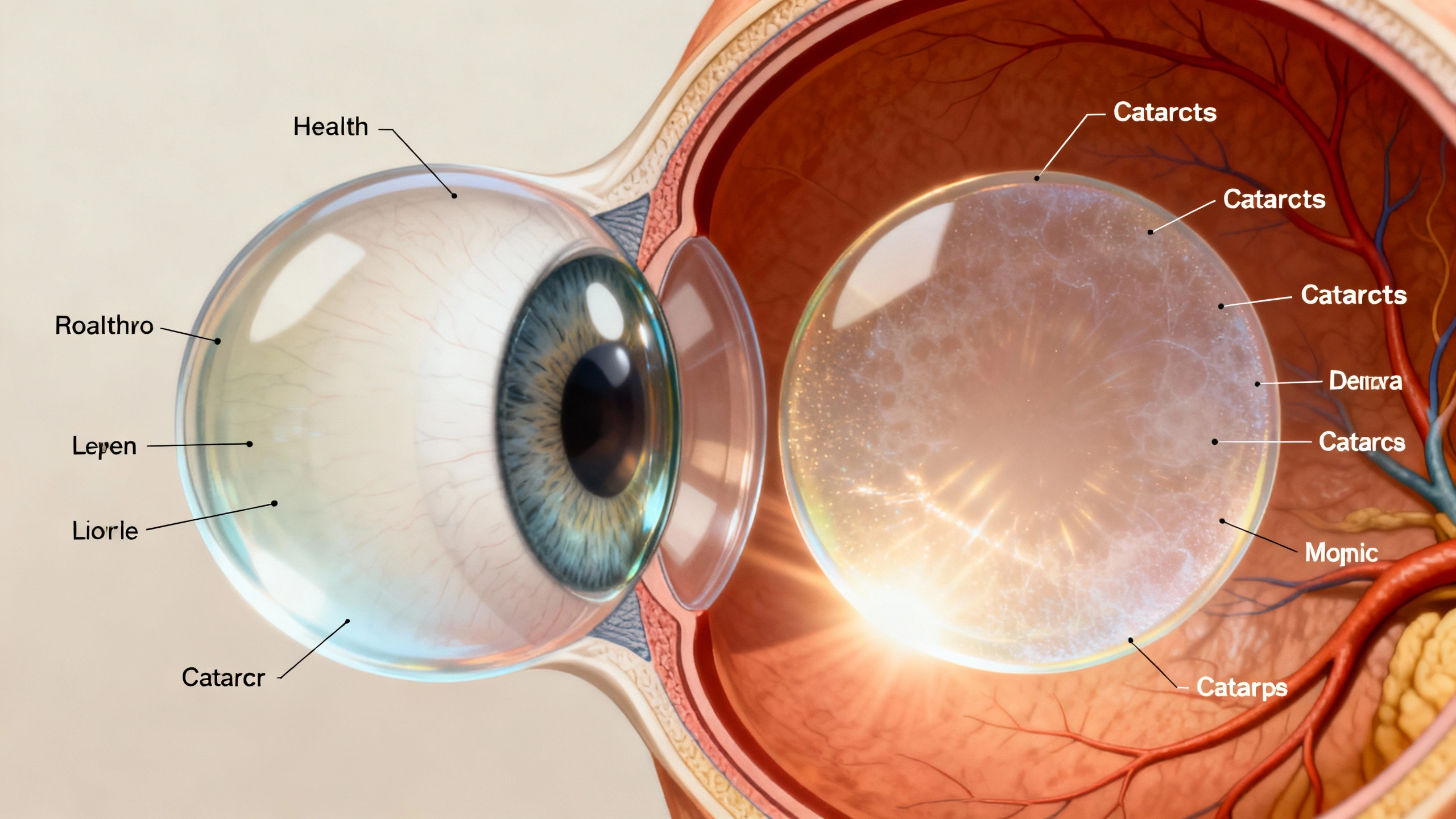
Cataracts are one of the most common eye conditions, especially among older adults. They can affect vision gradually and sometimes go unnoticed in the early stages. Understanding what cataracts look like, their symptoms, and how they develop is important for early detection and treatment. This guide provides a clear and practical overview.
What Are Cataracts?
Cataracts are a clouding of the eye’s natural lens, which lies behind the iris and the pupil. The lens focuses light onto the retina, allowing you to see clearly. When a cataract forms, the lens becomes opaque or cloudy, causing blurred vision.
Key Points:
- Cataracts are typically age-related but can occur due to genetics, trauma, or medical conditions like diabetes.
- They develop slowly and can affect one or both eyes.
- Cataracts are not a growth on the eye; they are a change in the lens structure.
Common Types of Cataracts
- Nuclear Cataracts
- Form in the central zone of the lens.
- May cause the lens to become yellow or brown.
- Cortical Cataracts
- Begin in the lens edges and have a wedge-like appearance.
- Often look like white streaks or spokes extending toward the center.
- Posterior Subcapsular Cataracts
- Develop at the back of the lens.
- Often cause glare or halos around lights.
- Congenital Cataracts
- Present at birth or during childhood.
- May appear as white or gray spots in the pupil.
What Cataracts Look Like
Cataracts can look different depending on the type and severity:
- Cloudy or Hazy Lens: The most common visual cue. The lens appears milky or foggy when viewed by an eye specialist.
- White Spots or Opacities: Especially noticeable in congenital cataracts.
- Yellowing of the Lens: Often seen in nuclear cataracts.
- Wedge-Shaped Streaks: Characteristic of cortical cataracts.
Visual Symptoms to Watch For:
- Blurred or double vision
- Sensitivity to light and glare
- Seeing halos around lights
- Colors appear faded or yellowed
How Cataracts Affect Vision
Cataracts distort the way light passes through the lens, causing vision problems. Common effects include:
- Blurry or Cloudy Vision: Objects may look foggy or unclear.
- Difficulty Seeing at Night: Reduced ability to see in low light.
- Increased Sensitivity to Light: Bright sunlight or headlights can cause discomfort.
- Color Changes: Colors may look dull or yellowed.
Causes and Risk Factors
Cataracts form when proteins in the lens clump together, clouding the lens. Key risk factors include:
- Aging (most common)
- Family history of cataracts
- Diabetes and other health conditions
- Eye injuries or surgeries
- Prolonged exposure to UV light
- Smoking and excessive alcohol use
Diagnosis of Cataracts
An eye doctor can detect cataracts through a comprehensive eye exam, which may include:
- Visual Acuity Test: Measures how well you see at different distances.
- Slit-Lamp Exam: Examines the lens under a microscope for clouding.
- Retinal Exam: Checks the back of the eye to rule out other vision problems.
Treatment Options
Cataracts are treatable, but early detection is key.
Non-Surgical Measures:
- Prescription glasses or contact lenses for mild cataracts
- Brighter lighting and magnifying lenses for reading
Surgical Treatment:
- Cataract Surgery: Removes the cloudy lens and replaces it with an artificial lens.
- Typically performed when cataracts significantly affect daily life.
- Highly effective with a high success rate.
Where Cataracts Can Be Found or Live
Cataracts are a condition of the eye, so they “live” in the lens of the eye. They are not contagious and do not occur outside the body. They are most commonly found in:
- Older adults (usually over 60)
- People with certain health conditions like diabetes
- Individuals with prolonged exposure to UV light or eye trauma
Unlike infections or parasites, cataracts develop internally due to aging, genetics, or injury rather than environmental exposure.
Prevention Tips
While not all cataracts can be prevented, the risk can be reduced by:
- Wearing sunglasses with UV protection
- Maintaining a healthy diet rich in antioxidants
- Managing chronic health conditions
- Avoiding smoking and excessive alcohol consumption
- Scheduling regular eye exams
FAQs About Cataracts
Q1: Can cataracts be reversed without surgery?
A1: No, cataracts cannot be reversed, but vision can be managed temporarily with glasses or brighter lighting. Surgery is the only effective permanent treatment.
Q2: Do cataracts cause pain?
A2: Cataracts are generally painless. Vision changes, glare, or blurred vision are the main symptoms. Pain usually indicates another eye condition.
Q3: How quickly do cataracts develop?
A3: Cataracts usually develop slowly over years. Some types, like posterior subcapsular cataracts, can progress more quickly.