

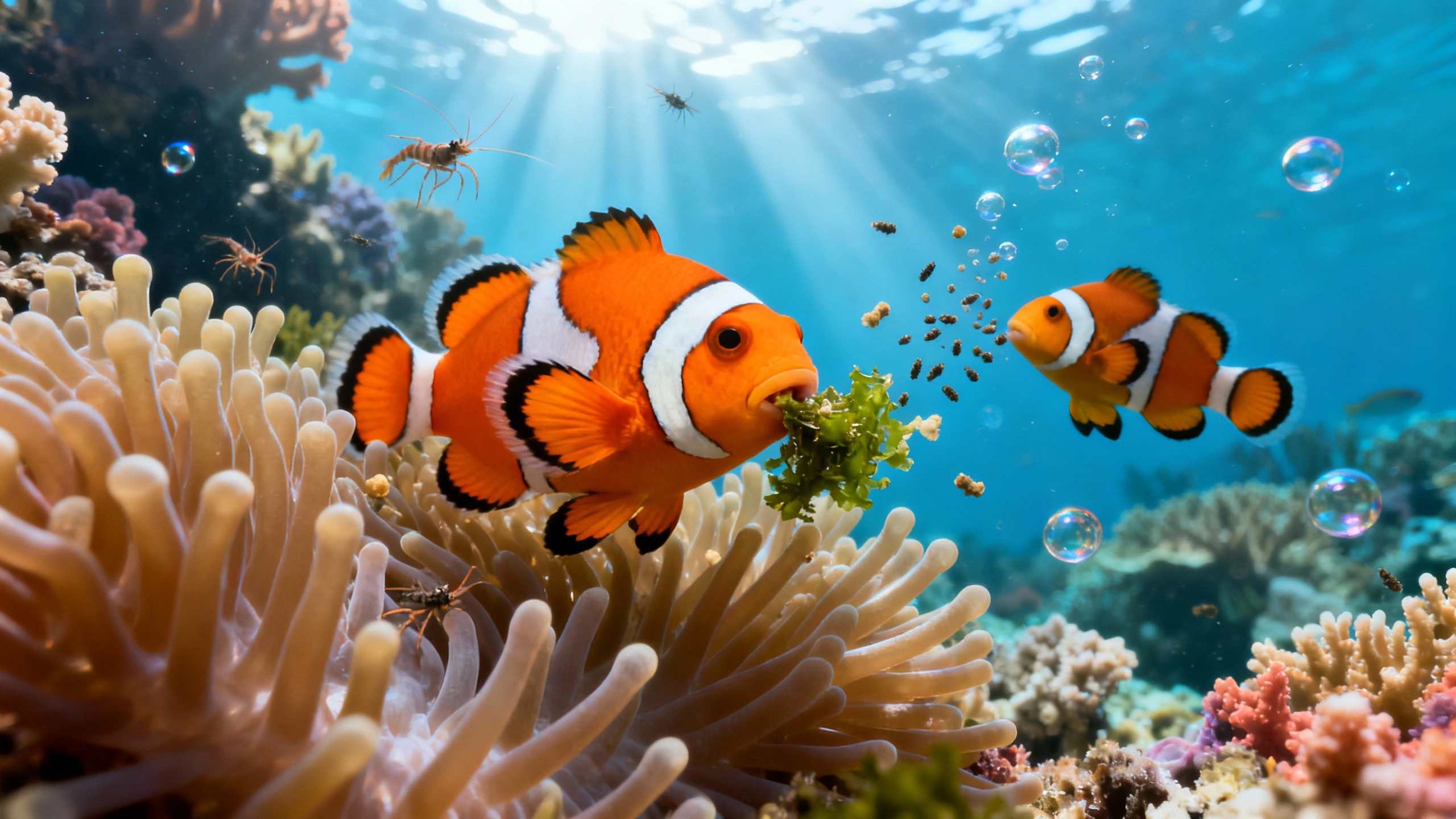
Clownfish, famously known from the movie Finding Nemo, are small, colorful marine fish that have captured the hearts of aquarium enthusiasts worldwide. Beyond their vibrant orange and white stripes, their diet plays a crucial role in their health, longevity, and coloration. Understanding what clownfish eat, how to feed them, and where they live is essential for both hobbyists and marine biology enthusiasts.
Natural Diet of Clownfish
In the wild, clownfish are omnivores, meaning they eat both animal and plant-based foods. Their diet is diverse and depends on the availability of food in their coral reef habitats.
Common Foods in the Wild
- Plankton: Tiny drifting organisms, including both zooplankton (animal) and phytoplankton (plant), are a primary food source.
- Algae: Helps supplement nutrients and fiber.
- Small Crustaceans: Such as copepods, amphipods, and tiny shrimp.
- Fish Eggs and Larvae: Opportunistic feeding on eggs of other fish.
- Detritus: Organic matter and leftover scraps in their environment.
Clownfish often live in a symbiotic relationship with sea anemones, which provide protection and a nearby source of leftover food.
What Clownfish Eat in Aquariums
When keeping clownfish in captivity, their diet should mimic their natural food as closely as possible.
Best Foods for Captive Clownfish
- Commercial Fish Food
- High-quality flakes or pellets designed for marine fish.
- Look for ingredients like shrimp meal, fish meal, and algae.
- Frozen or Live Foods
- Brine shrimp, mysis shrimp, or krill.
- Can enhance coloration and growth.
- Vegetables and Algae
- Spirulina flakes or nori (seaweed) occasionally.
- Helps maintain health and supports digestive function.
- Feeding Frequency
- Adult clownfish: 1–2 times per day.
- Juveniles: 2–3 smaller feedings per day.
Tip: Avoid overfeeding. Excess food can pollute the tank, leading to water quality issues and potential health problems.
Signs of a Healthy Diet
A well-fed clownfish displays:
- Bright, vibrant coloration
- Active swimming and interaction with their environment
- Healthy body shape (not bloated or thin)
- Regular eating behavior at feeding times
Warning signs of poor nutrition:
- Faded or dull colors
- Lethargy or hiding more than usual
- Weight loss or abnormal swimming patterns
Feeding Tips for Aquarium Owners
- Variety is key: Rotate between flakes, pellets, and live/frozen foods.
- Observe your fish: Note which foods they prefer and how much they eat.
- Avoid overfeeding: Only feed what can be consumed in 2–3 minutes.
- Supplement occasionally: Vitamin-enriched foods can boost health.
- Tank cleanliness: Remove uneaten food to prevent water contamination.
Where Clownfish Can Be Found or Live
Clownfish are native to the warm waters of the Indian and Pacific Oceans, including:
- Great Barrier Reef (Australia)
- Southeast Asia reefs
- Red Sea
Habitat Preferences
- Shallow lagoons and reef crests with plenty of coral.
- Symbiotic relationship with sea anemones: Clownfish are immune to their stinging tentacles, which protect them from predators.
- Sheltered crevices: Offer protection and breeding grounds.
Note: Their survival heavily relies on healthy coral reef ecosystems and the presence of host anemones.
Common Questions About Clownfish Diet
1. Can clownfish survive on only flakes or pellets?
Yes, high-quality marine flakes or pellets can sustain them, but adding live or frozen foods improves health and coloration.
2. Do clownfish eat their anemone hosts?
No, clownfish do not harm their anemones. They may nibble on algae nearby but generally maintain a symbiotic, mutually beneficial relationship.
3. How do I know if I am feeding too much?
Uneaten food accumulating in the tank or cloudy water are signs of overfeeding. Stick to small portions your fish can finish in a few minutes.
Conclusion
Feeding clownfish a balanced diet is essential for their health, color, and longevity. In the wild, they enjoy a mix of plankton, algae, and tiny crustaceans, while in captivity, a combination of flakes, pellets, frozen foods, and occasional vegetables works best. Observing their behavior and adjusting their diet ensures happy, vibrant clownfish in your aquarium.