

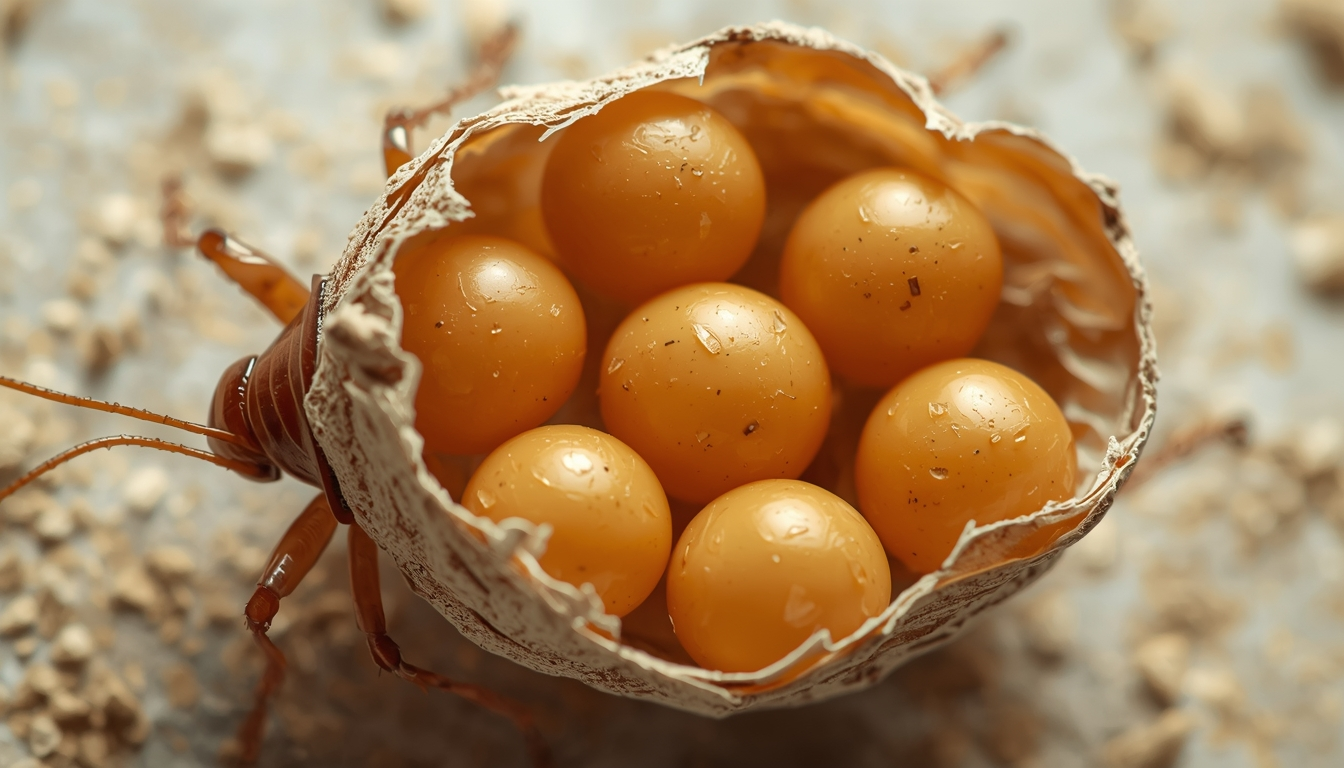
Cockroach eggs are often hidden in plain sight and can be easy to miss if you don’t know what you’re looking for. Understanding how to identify them is an important step in preventing and controlling a roach infestation in homes, apartments, and businesses.
This guide explains what cockroach eggs look like, where they’re commonly found, and what you can do if you discover them.
Understanding Cockroach Reproduction
Cockroaches don’t lay individual eggs like many insects. Instead, most species produce a protective egg case called an ootheca.
- Each ootheca contains multiple eggs
- The case protects eggs from drying out and minor damage
- One ootheca can produce 10–50 baby roaches, depending on the species
Because of this, even a single egg case can quickly turn into a serious infestation.
What Do Cockroach Eggs Look Like?
The Egg Case (Ootheca)
Cockroach eggs are almost always found inside an ootheca, not loose.
Common visual features include:
- Shape:
- Oval, capsule-like, or bean-shaped
- Size:
- About ¼ to ½ inch long (similar to a grain of rice or small bean)
- Color:
- Light tan, brown, reddish-brown, or dark brown
- Texture:
- Smooth or slightly ridged
- Firm and leathery, not soft
⚠️ Important: Many people mistake oothecae for seeds, mouse droppings, or food debris.
What Do Cockroach Eggs Look Like Inside?
When opened (usually by professionals), an ootheca contains:
- Neatly arranged, tiny white or pale-yellow eggs
- Eggs are soft and delicate
- Each egg will hatch into a nymph (baby roach)
You typically won’t see individual eggs unless the case is damaged.
Differences by Cockroach Species
German Cockroach Eggs
- Light brown ootheca
- Carried by the female until just before hatching
- One case may hold 30–40 eggs
American Cockroach Eggs
- Darker reddish-brown case
- Often glued to surfaces
- Contains about 14–16 eggs
Orient*l Cockroach Eggs
- Dark brown or black case
- Deposited in warm, hidden areas
Knowing the species helps determine the best control method.
Where Cockroach Eggs Can Be Found or Live
Cockroach eggs are placed in protected, hidden locations where they are unlikely to be disturbed.
Common places include:
- Behind or under refrigerators and stoves
- Inside kitchen cabinets and drawers
- Under sinks and near plumbing
- Cracks in walls, baseboards, or floors
- Cardboard boxes and paper stacks
- Electrical appliances and wall voids
Roaches prefer warm, dark, and humid environments, especially near food and water sources.
Signs You May Have Cockroach Eggs
You might suspect egg cases if you notice:
- Small brown capsule-shaped objects in hidden areas
- Sudden appearance of many small roaches
- Roach droppings (pepper-like specks)
- Musty or oily odor in infested areas
Finding eggs usually means active reproduction is already happening.
What to Do If You Find Cockroach Eggs
Immediate Steps
- Do not crush egg cases (can spread eggs)
- Wear gloves when handling
- Vacuum the area thoroughly
- Seal and discard vacuum contents immediately
Long-Term Control Tips
- Reduce moisture (fix leaks, wipe sinks)
- Store food in airtight containers
- Seal cracks and crevices
- Use professional pest control for severe infestations
Egg cases are resistant to many sprays, so professional treatment is often most effective.
Can Cockroach Eggs Be Harmful?
While eggs themselves don’t bite or sting, they can:
- Lead to rapid infestations
- Increase allergy and asthma symptoms
- Contaminate food and surfaces after hatching
Early detection is key to minimizing health risks.
Frequently Asked Questions (FAQ)
1. Can cockroach eggs hatch after being vacuumed?
Yes, if the egg case survives. Always dispose of vacuum contents in a sealed bag outside.
2. How long does it take for cockroach eggs to hatch?
Most oothecae hatch within 2–8 weeks, depending on species and temperature.
3. Are cockroach eggs visible to the naked eye?
Yes. The egg cases are clearly visible, but individual eggs inside are usually not.
4. Do cockroaches lay eggs every day?
No, but a single female can produce multiple egg cases during her lifetime.