

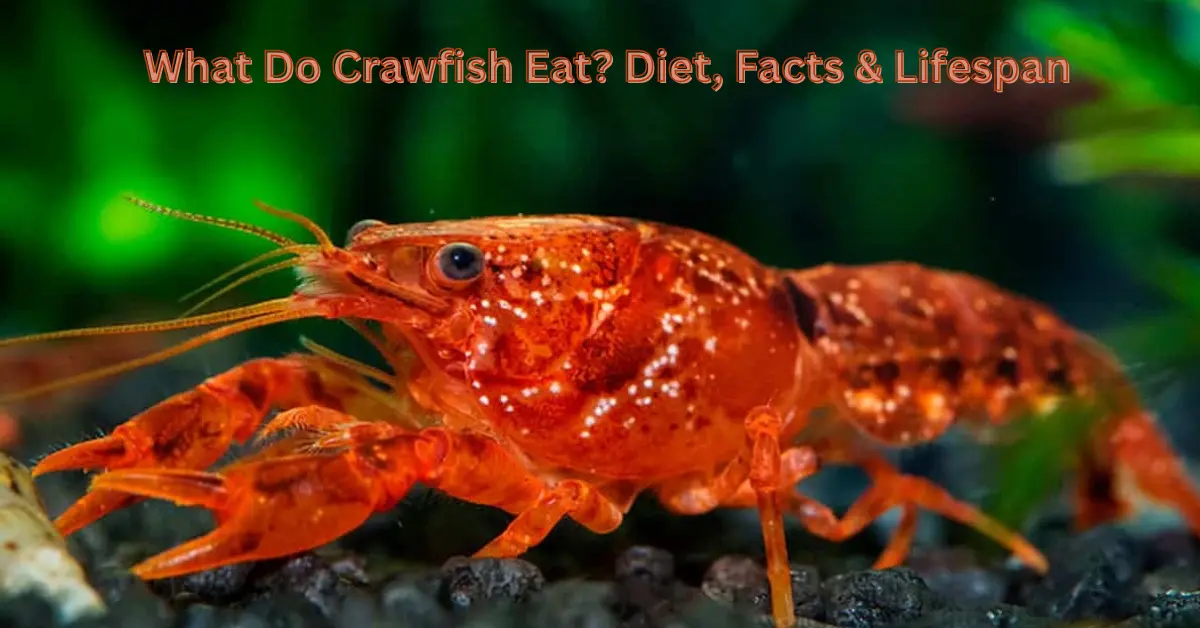
Crawfish, also known as crayfish or crawdads, are fascinating freshwater crustaceans that resemble small lobsters. They inhabit rivers, streams, lakes, ponds, marshes, and swamps around the world, with over 700 species documented. Interestingly, around 70% of all crayfish species are native to U.S. waters alone.
Understanding what crawfish eat not only reveals their ecological role but also explains their behavior, growth patterns, and impact on freshwater ecosystems.
Crawfish Habitats and How They Affect Diet
Crawfish live in diverse aquatic environments. Some prefer flowing waters such as rivers and streams, while others thrive in standing waters like ponds or swamps. Their choice of habitat often influences their diet.
Crawfish are also burrowers, and their burrowing habits vary:
- Primary Burrowers: These species dig complex burrows underground in wet fields, ditches, and meadows. They spend most of their time inside, only leaving to forage or mate.
- Secondary Burrowers: These crawfish dig simpler burrows, usually connected to a permanent water source. They spend most of their time in the water, only venturing out occasionally.
- Tertiary Burrowers: These live entirely in permanent water bodies and only leave the water under extreme conditions to make shelters.
The habitat determines what foods are available, shaping each crawfish’s diet. For instance, a river-dwelling crawfish may eat more insects, while pond-dwellers may focus on plants and algae.
Crawfish Diet Overview
Crawfish are omnivorous scavengers, meaning they eat both plant and animal matter, whether alive or dead. Their diet is opportunistic—they consume whatever is readily available in their habitat.
- Adult Crawfish: Tend to be more herbivorous, favoring aquatic plants, algae, leaves, and twigs.
- Juvenile Crawfish: Are primarily carnivorous, eating aquatic insects, snails, tadpoles, salamanders, and small fish.
Interestingly, cannibalism is common among crawfish of all ages, especially when food is scarce.
Foods Crawfish Commonly Eat
Here’s a comprehensive list of what crawfish eat:
| Food Type | Description | Typical Age Preference |
| Decaying plant and animal matter | Dead leaves, plants, or small animals | All ages |
| Aquatic plants | Pondweeds, algae, and other submerged vegetation | Adults |
| Leaves and twigs | Fallen plant debris from surrounding land | Adults |
| Insects and insect larvae | Aquatic larvae, beetles, and flies | Juveniles & adults |
| Fish and fish eggs | Small fish or eggs found in water | Juveniles |
| Amphibians | Tadpoles or small salamanders | Juveniles |
| Smaller crawfish | Cannibalistic behavior | All ages |
| Plankton | Tiny floating organisms in the water | Mainly juveniles |
This table shows that crawfish are highly adaptable feeders. Their diet can change seasonally or based on what’s available in their habitat.
The Digestive System of Crawfish
Crawfish have a two-part stomach system that helps them process a wide variety of foods. Though simple compared to mammals, it is highly efficient.
- Cardiac Stomach:
- Food enters the cardiac stomach first, where it is mechanically broken down.
- Crawfish have teeth in this stomach (called the gastric mill) that grind and crush food into smaller pieces.
- Food enters the cardiac stomach first, where it is mechanically broken down.
- Pyloric Stomach:
- After mechanical digestion, food moves to the pyloric stomach.
- Here, chemical digestion occurs, similar to humans. Digestive glands produce acids to break down nutrients.
- After mechanical digestion, food moves to the pyloric stomach.
- Intestines:
- Nutrients are absorbed in the intestines.
- Waste and undigested material exit through the anus.
- Nutrients are absorbed in the intestines.
This specialized digestive system allows crawfish to extract nutrients from both plants and animals efficiently.
How Crawfish Find Food
Crawfish are opportunistic feeders, meaning they actively seek out whatever is available rather than relying on a single food source. They use their sensitive antennae and chelae (claws) to locate, capture, and manipulate food.
- In rivers and streams: Crawfish often hunt small insects, fish eggs, and detritus that drift in the current.
- In ponds and lakes: They scavenge plant debris, algae, and decaying animals along the bottom.
- In burrows: Crawfish may store food temporarily or feed on buried organic matter.
Their flexible diet allows them to survive in a wide variety of conditions, from polluted streams to pristine lakes.
Crawfish as Ecosystem Engineers
Crawfish are not just consumers—they actively shape their environment:
- Their burrowing aerates soil and redistributes sediment, affecting water quality.
- They consume decaying matter, helping recycle nutrients in freshwater ecosystems.
- By preying on insects and small fish, they control populations and maintain ecological balance.
A healthy crawfish population indicates a thriving aquatic ecosystem.
Fun Facts About Crawfish Eating Habits
- Crawfish can eat fish larger than themselves by scavenging or waiting for weakened prey.
- Some species exhibit food caching behavior, storing edible material in burrows.
- Cannibalism increases during molting, when crawfish are soft-shelled and vulnerable.
- Crawfish often feed at night, making them primarily nocturnal foragers.
Summary
Crawfish are fascinating omnivorous scavengers that play an essential role in freshwater ecosystems. Their diets include:
- Aquatic plants and algae
- Insects and larvae
- Fish and eggs
- Decaying matter
- Smaller crawfish (cannibalism)
Their flexible feeding habits, combined with burrowing and scavenging behavior, allow them to thrive in rivers, streams, lakes, and ponds. Understanding what crawfish eat provides insight into their ecological role and their importance in maintaining freshwater habitats.
Next time you see a crawfish burrow or spot one foraging at night, you’ll know exactly what it’s likely eating!
What is a crawfish’s favorite food?
Crawfish prefer aquatic plants, algae, and decaying leaves. Juveniles often favor small insects and fish eggs.They are opportunistic and eat whatever food is available.
Is crawfish a crab?
No, crawfish are not crabs. They are freshwater crustaceans related to lobsters.
They have long bodies and large front claws, unlike crabs.
What is the lifespan of a crawfish?
Crawfish usually live 2 to 3 years in the wild.Some species can survive up to 5 years under ideal conditions. Lifespan depends on habitat, predators, and food availability.
What do crabs and lobsters eat?
Crabs and lobsters are omnivorous like crawfish. They eat algae, small fish, mollusks, and detritus. They scavenge and hunt depending on what is available.
Do crawfish scream when you boil them?
No, crawfish do not scream. The sound heard is escaping steam from their shells.
They do not have vocal cords or make cries like humans.
Can I touch a crayfish?
Yes, you can touch a crayfish carefully.Use gentle hands to avoid its claws and stress.
Handling them briefly is safe but avoid pulling them from water abruptly.