

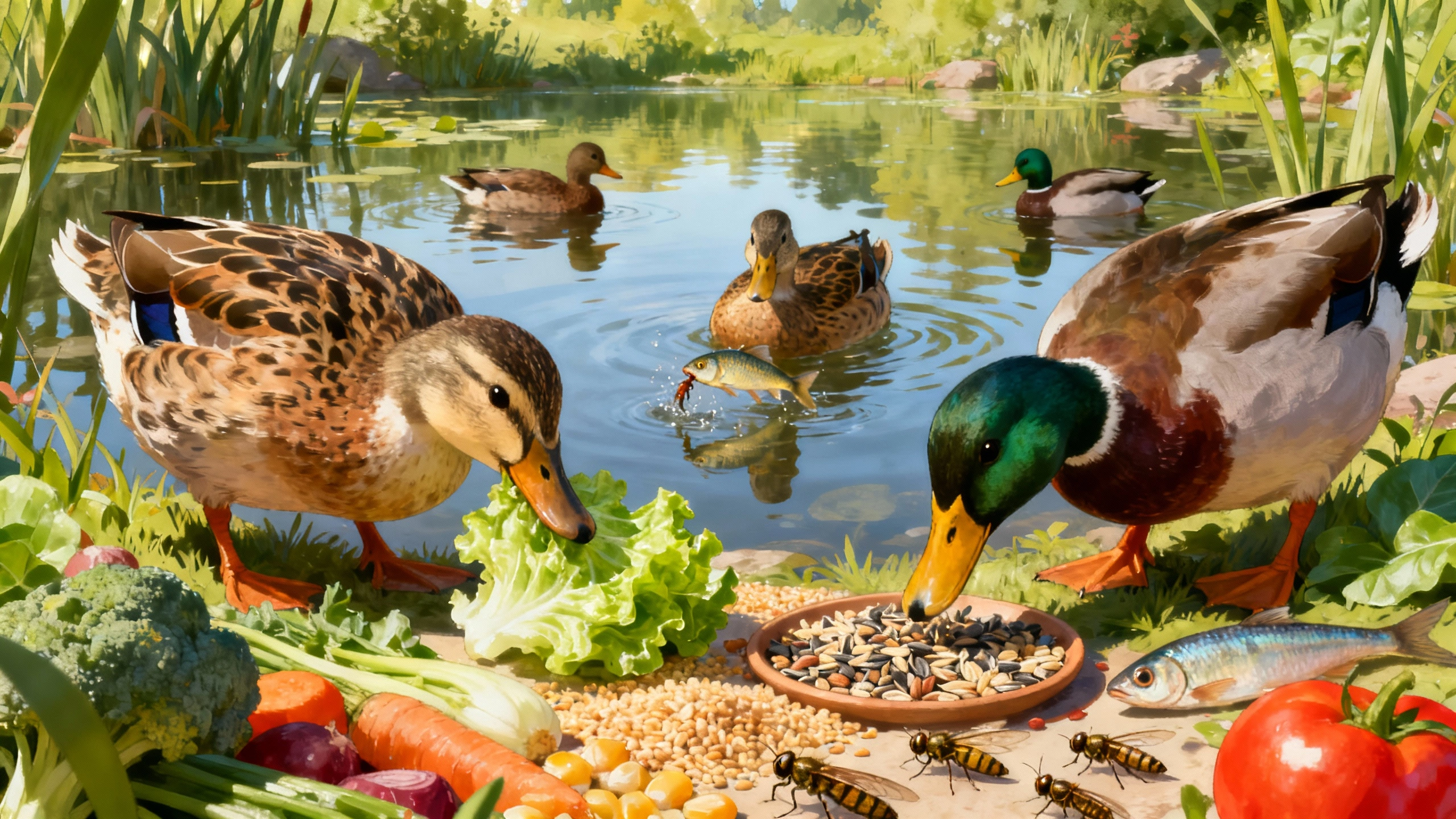
Ducks are charming, social birds found in many parts of the world, and understanding their diet is key to keeping them healthy and happy. While many people picture ducks waddling in ponds, happily munching on bread, their nutritional needs are much more diverse. This guide will explore what ducks eat, provide practical feeding tips, and help you recognize signs of a healthy diet.
Duck Diet Basics
Ducks are omnivores, meaning they eat both plants and animals. Their diet varies depending on whether they are wild or domesticated. Ducks need a balance of proteins, vitamins, minerals, and carbohydrates to thrive. A healthy diet helps maintain strong feathers, proper growth, and high energy levels.
Key Components of a Duck’s Diet
- Protein: Essential for growth and egg production. Sources include insects, worms, and commercial duck feed.
- Vegetables & Greens: Provide fiber, vitamins, and minerals. Examples: lettuce, kale, peas.
- Grains & Seeds: Supply energy. Examples: corn, wheat, barley, oats.
- Fruits: Ducks enjoy fruits in moderation. Examples: berries, melon, apple slices.
- Calcium: Needed for eggshell formation. Sources: crushed oyster shells or eggshells.
Foods Ducks Commonly Enjoy
Here’s a closer look at the types of foods ducks naturally like to eat:
1. Insects and Worms
- Crickets, mealworms, and earthworms are protein-rich treats.
- Wild ducks often forage for these in ponds, grass, or muddy soil.
- Visual cue: Ducks will often dip their heads underwater or dig in soft soil to find them.
2. Aquatic Plants
- Duckweed, water lilies, and pondweed are favorite greens for wild ducks.
- These plants provide nutrients and mimic their natural foraging environment.
- Tip: Avoid toxic plants like water hemlock.
3. Grains and Seeds
- Corn, wheat, barley, and oats are excellent for energy.
- Best offered in small amounts to avoid obesity.
- Pro tip: Scatter grains in water for ducks to forage naturally.
4. Vegetables and Leafy Greens
- Lettuce, spinach, kale, and peas are healthy and hydrating.
- Chop vegetables into small pieces to make eating easier.
- Tip: Avoid iceberg lettuce as it has little nutritional value.
5. Fruits
- Ducks enjoy berries, melon, grapes, and apple slices.
- Serve fruits in moderation because they are high in sugar.
- Caution: Avoid citrus and avocado, which can upset digestion.
6. Commercial Duck Feed
- Formulated to provide complete nutrition.
- Usually comes in pellet or crumble form for easy feeding.
- Tip: Feed pellets on dry land rather than floating in water to prevent contamination.
Feeding Tips for Pet Ducks
- Avoid bread: Bread provides empty calories and can harm digestion.
- Fresh water: Ducks need clean water to swallow food and stay hydrated.
- Moderation: Overfeeding, even healthy foods, can lead to obesity.
- Variety: Offer a mix of greens, grains, protein, and occasional treats to keep ducks healthy and interested in their food.
Signs of a Healthy Diet
Watch for these signs to know your ducks are eating well:
- Smooth, shiny feathers
- Active behavior and strong swimming
- Regular egg production in females
- Healthy weight and appetite
Signs of poor nutrition may include lethargy, feather loss, soft-shelled eggs, or digestive issues.
Where Ducks Can Be Found or Live
Ducks are adaptable birds and can thrive in a variety of habitats:
- Freshwater ponds, lakes, and rivers: Most common wild habitats
- Wetlands and marshes: Provide abundant food sources
- Farmyards or backyards: Domesticated ducks enjoy ponds or small water features
- Urban parks: Many city ducks forage near humans, though wild diets are preferred
Ducks prefer areas with ample water, vegetation, and space to forage, making food availability a key factor in where they live.
Frequently Asked Questions (FAQ)
Q1: Can ducks eat bread?
No, bread is not recommended. It lacks nutrition and can cause digestive problems if fed regularly. Stick to grains, vegetables, and commercial feed.
Q2: How often should I feed ducks?
Pet ducks should be fed once or twice daily. Wild ducks forage naturally, so additional feeding isn’t necessary unless you want to supplement their diet.
Q3: What foods are toxic to ducks?
Avoid avocado, chocolate, caffeine, and anything moldy or salty. Citrus in large amounts can also upset their digestion.