

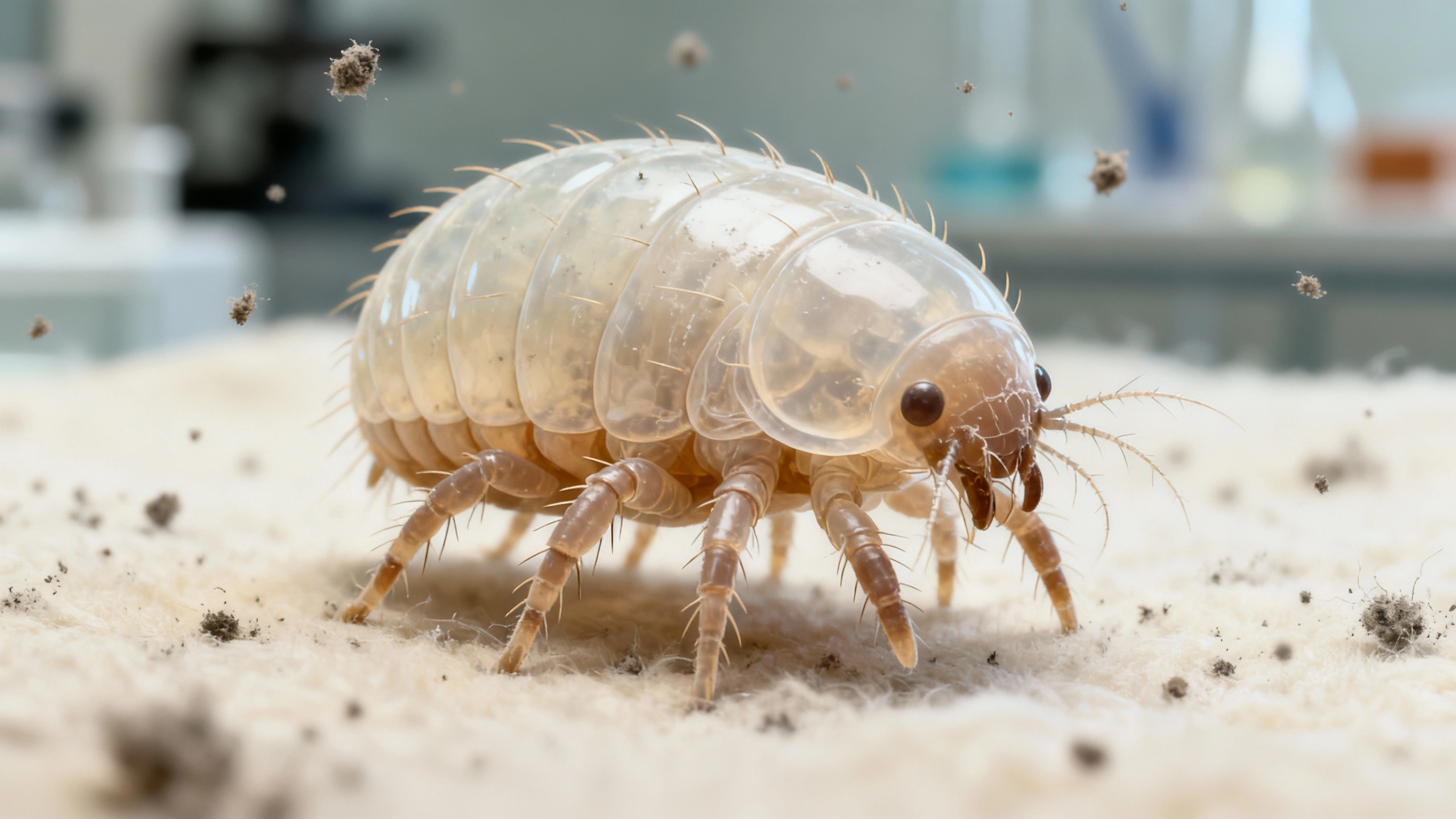
Dust mites are one of those creatures you may feel the effects of—like sneezing or itchy eyes—without ever seeing them. That’s because dust mites are microscopic, invisible to the naked eye, and live quietly in our homes. Understanding what dust mites look like (and where they live) can help you manage allergies and keep your indoor environment healthier.
This guide explains what dust mites look like, how to recognize signs of their presence, and what you can do to reduce them.
What Are Dust Mites?
Dust mites are tiny, eight-legged relatives of spiders and ticks. They are not insects and they do not bite or sting. Instead, they feed on dead skin cells shed by humans and pets.
Key facts:
- Size: About 0.2–0.3 millimeters long
- Visibility: Not visible without a microscope
- Lifespan: Around 1–3 months
- Diet: Dead skin flakes, fungi, and organic debris
What Do Dust Mites Look Like Under a Microscope?
Although you can’t see dust mites with your eyes, scientists have studied their appearance closely.
Physical Appearance
Under magnification, dust mites:
- Have a cream or translucent white body
- Are oval-shaped
- Have eight short legs
- Appear slightly fuzzy due to fine hairs on their body
- Lack eyes and wings
They resemble tiny, pale spider-like creatures with stubby legs.
Size Comparison
To put it into perspective:
- A dust mite is smaller than a grain of sand
- Dozens could fit on the tip of a needle
Can You See Dust Mites Without a Microscope?
No—dust mites cannot be seen with the naked eye.
What people often mistake for dust mites:
- Dust particles
- Fabric fibers
- Lint
- Pollen grains
👉 If you “see” something crawling, it’s likely not a dust mite.
Signs Dust Mites May Be Present
Since you can’t see them directly, their presence is usually detected through symptoms.
Common Allergy Symptoms
Dust mites are a major trigger for indoor allergies:
- Sneezing
- Runny or stuffy nose
- Itchy eyes
- Coughing
- Post-nasal drip
Skin & Breathing Symptoms
In sensitive individuals:
- Eczema flare-ups
- Itchy skin (without visible bites)
- Wheezing or asthma symptoms
⚠️ These reactions are caused by dust mite droppings and shed body parts, not the mites themselves.
Where Dust Mites Can Be Found or Live
Dust mites thrive in warm, humid environments where dust and skin flakes collect.
Common Places Dust Mites Live
- Mattresses and pillows
- Bed sheets and blankets
- Upholstered furniture
- Carpets and rugs
- Curtains
- Stuffed toys
- Pet bedding
Ideal Conditions for Dust Mites
- Temperatures: 20–25°C (68–77°F)
- Humidity: Above 50%
- Dark, undisturbed areas
They are especially common in bedrooms, where humans shed skin while sleeping.
Dust Mites vs Other Tiny Household Pests
| Pest | Visible to Eye | Bites | Appearance |
|---|---|---|---|
| Dust mites | ❌ No | ❌ No | Microscopic, pale |
| Bed bugs | ✅ Yes | ✅ Yes | Flat, brown, apple-seed sized |
| Fleas | ✅ Yes | ✅ Yes | Small, dark, jumping |
| Lice | ✅ Barely | ✅ Yes | Tiny, crawling insects |
If you’re seeing bugs, dust mites are not the cause.
How to Reduce Dust Mites in Your Home
You can’t eliminate dust mites entirely, but you can dramatically reduce their numbers.
Practical Tips
- Wash bedding weekly in hot water (60°C / 140°F)
- Use dust-mite-proof covers on mattresses and pillows
- Vacuum carpets using a HEPA filter
- Reduce indoor humidity below 50%
- Replace heavy curtains with washable ones
- Wash stuffed toys regularly or freeze them overnight
These steps are especially important for people with allergies, asthma, or eczema.
Are Dust Mites Dangerous?
Dust mites are not dangerous in the traditional sense:
- They do not bite
- They do not spread disease
However, they are a significant allergen, especially for:
- Children
- People with asthma
- Individuals with sensitive skin
Managing dust mites can greatly improve indoor air quality and comfort.
Frequently Asked Questions (FAQ)
1. What color are dust mites?
Dust mites are usually translucent white or cream-colored, but they are too small to see without magnification.
2. Can dust mites live on pets?
Dust mites don’t live on pets, but they commonly live in pet bedding, carpets, and furniture where pets shed skin.
3. Do dust mites bite humans?
No. Dust mites do not bite. Skin reactions are caused by allergies, not bites.
4. How do I know if I’m allergic to dust mites?
Common signs include year-round sneezing, nasal congestion, itchy eyes, or asthma symptoms, especially indoors or in bed.