

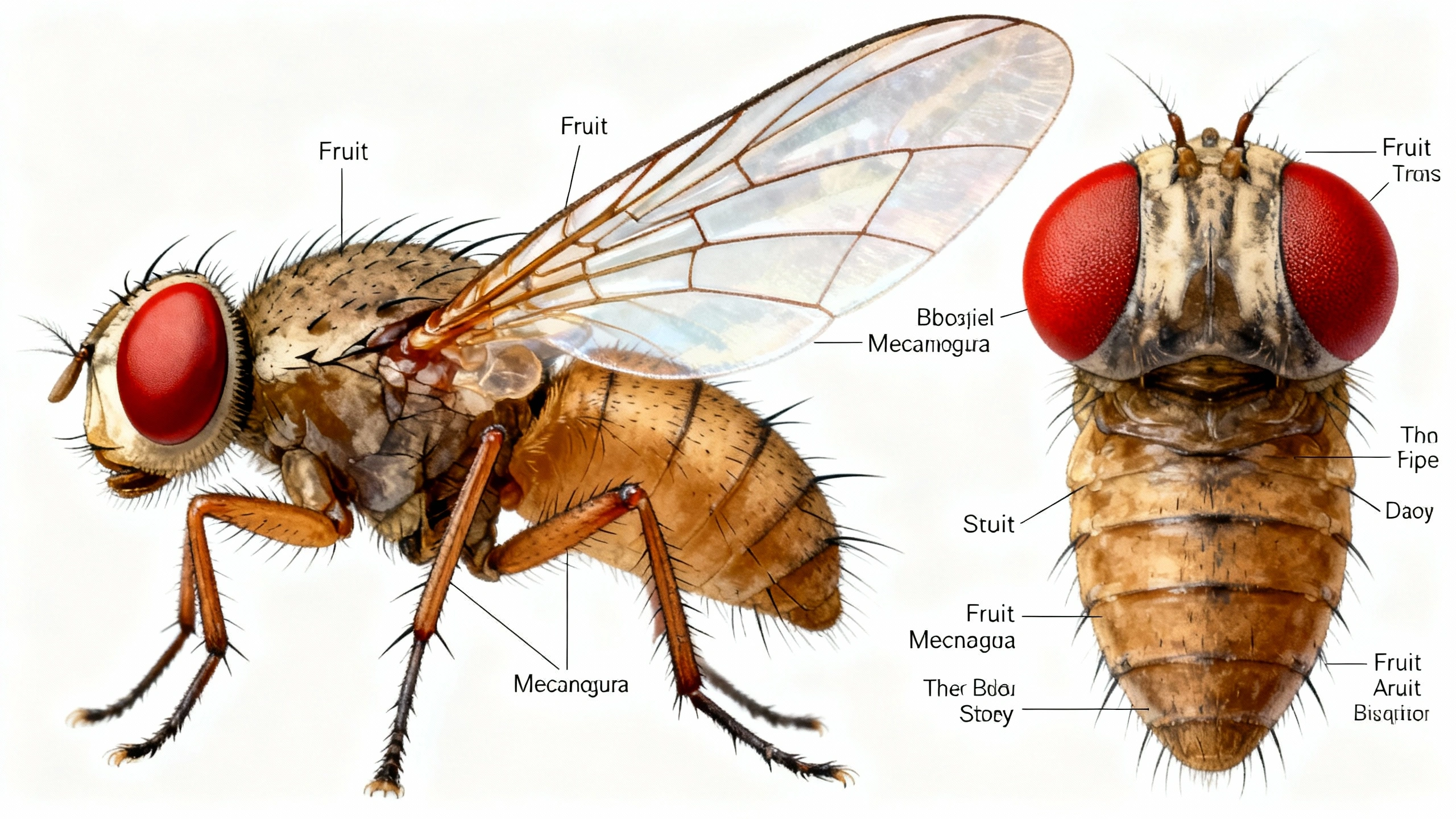
Fruit flies are tiny insects that many people encounter in kitchens, grocery stores, or near overripe fruit. While small, understanding what they look like and where they live is essential for managing them effectively. This guide provides clear descriptions, practical advice, and tips for identification.
Appearance of Fruit Flies
Fruit flies (Drosophila melanogaster) are small insects with distinct physical features. Their appearance makes them relatively easy to identify if you know what to look for.
Size and Shape
- Fruit flies are very small, typically 2–4 mm long (about the size of a sesame seed).
- They have a round, oval-shaped body.
- Despite their tiny size, their movements are noticeable as they fly quickly around food sources.
Coloration
- Adults usually have a tan or light brown body.
- Their abdomen may appear slightly darker, sometimes with faint black stripes.
- The head often features bright red eyes, which is one of their most distinctive characteristics.
Wings and Legs
- Fruit flies have transparent wings that extend slightly beyond their body.
- Their legs are thin and delicate, often appearing almost translucent.
- The wings allow for rapid, erratic flight patterns, which can help in spotting them in motion.
Distinguishing Features
- Red eyes are a hallmark of many fruit fly species.
- Short antennae on the head, often difficult to see without magnification.
- Small size differentiates them from larger houseflies.
Lifecycle and Visual Signs
Understanding a fruit fly’s lifecycle can help explain their appearance at different stages.
Egg Stage
- Tiny, white, oval-shaped eggs often laid on fermenting fruit or other moist surfaces.
- Only about 0.5 mm in size, making them nearly invisible without a magnifying glass.
Larvae (Maggots)
- Worm-like, creamy-white larvae.
- Approximately 3–4 mm long, growing as they feed on decaying organic matter.
Pupa Stage
- Brownish or reddish pupae form near the food source.
- Stationary, shell-like, and about the size of a grain of rice.
Adult Stage
- Fully formed fruit flies emerge with the characteristic red eyes, brownish body, and clear wings.
- Adults can live up to 30 days, producing hundreds of eggs during their lifetime.
Where Fruit Flies Can Be Found or Live
Fruit flies thrive in warm, moist environments with fermenting organic material. Common habitats include:
- Kitchens: Especially near overripe fruits, vegetables, or food scraps.
- Garbage areas: Trash bins or compost piles with decaying matter.
- Grocery stores: Fruit displays or produce sections.
- Brewing areas: Fermenting liquids like beer, wine, or vinegar.
- Drain pipes: Moist areas where organic residues accumulate.
Practical tip: Keeping these areas clean and dry can significantly reduce fruit fly populations.
Tips for Identifying Fruit Flies at Home
- Look for small, fast-moving flies around fruit or trash.
- Check the color of their eyes—bright red is a strong indicator.
- Inspect fruits or vegetables for eggs or larvae, especially overripe ones.
- Observe flight patterns: erratic, short bursts near fermenting items.
Common Questions About Fruit Flies
1. Are fruit flies harmful to humans?
- Fruit flies do not bite or sting.
- They can contaminate food with bacteria if left unchecked.
2. How quickly do fruit flies reproduce?
- Female fruit flies can lay up to 500 eggs in their lifetime.
- Eggs hatch in 24–30 hours, meaning infestations can grow rapidly.
3. Can fruit flies live year-round?
- Indoors, yes—they thrive in warm, humid environments.
- Outdoors, populations may decline in cold weather but overwinter in sheltered areas.
Conclusion
Fruit flies may be tiny, but their distinct features—red eyes, small size, and fast flight—make them easy to spot once you know what to look for. Keeping areas clean, removing overripe produce, and managing moisture can help prevent infestations. By understanding their lifecycle and habitats, you can tackle fruit flies effectively and maintain a healthier environment.
FAQ
Q1: Can fruit flies infest unopened fruit?
- Usually not. They are attracted to ripe or damaged fruit, where they can lay eggs.
Q2: How long do adult fruit flies live?
- About 30 days, but the lifecycle from egg to adult can be as short as a week.
Q3: Do fruit flies bite pets?
- No, they only feed on fermenting organic material, not on animals or humans.