

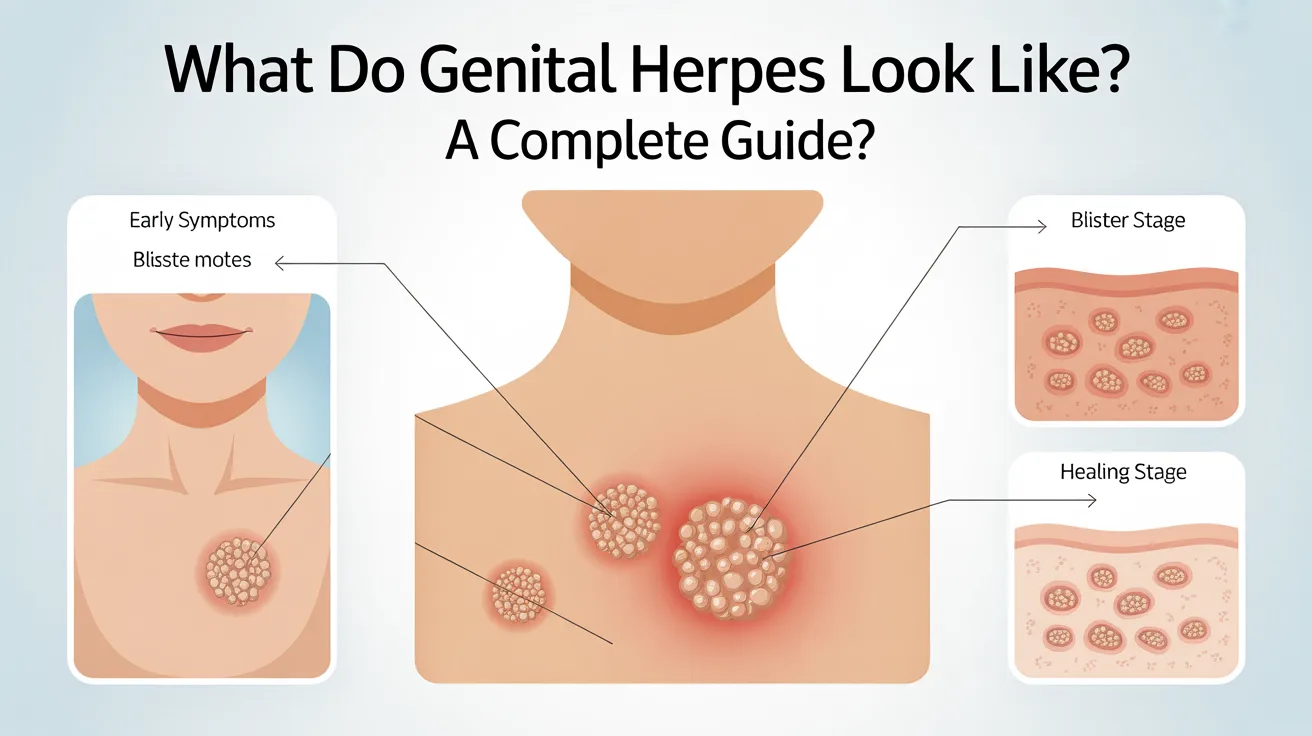
Genital herpes is a common sexually transmitted infection (STI) caused by the herpes simplex virus (HSV). Recognizing the symptoms early can help manage outbreaks, reduce transmission, and prevent complications. This guide provides a clear overview of what genital herpes looks like, how to identify it, and practical advice for managing it.
Understanding Genital Herpes
Genital herpes is primarily caused by two types of the herpes simplex virus:
- HSV-1: Often associated with cold sores but can cause genital infections through oral-genital contact.
- HSV-2: More commonly linked to genital infections.
The infection can be asymptomatic (showing no visible symptoms) or cause noticeable outbreaks of sores on the genital area.
Common Symptoms of Genital Herpes
Symptoms vary depending on the stage of infection and individual immune response. Key signs include:
- Blisters or sores: Small, fluid-filled bumps on or around the genitals, anus, or inner thighs.
- Redness and irritation: The affected area may appear inflamed and feel sensitive.
- Pain or burning: Particularly during urination if sores are near the urethra.
- Itching or tingling: A common warning sign before blisters appear (prodrome phase).
- Flu-like symptoms: Fever, swollen lymph nodes, and body aches during the initial outbreak.
Symptoms may recur periodically, usually triggered by stress, illness, or hormonal changes.
Visual Appearance of Genital Herpes
Genital herpes has distinctive visual cues:
- Small clusters of blisters: These often start as tiny, clear bumps that eventually fill with fluid.
- Open sores or ulcers: Blisters can break, leaving painful ulcers with a red base.
- Crusting and healing: Sores eventually crust over and heal, usually within 2–4 weeks for the first outbreak.
- Color changes: The skin around sores may appear reddish or slightly darker than surrounding skin.
Tip: Early outbreaks may look like pimples, insect bites, or other rashes, so careful observation and testing are important.
Where Genital Herpes Can Be Found or Live
The herpes simplex virus thrives in human skin and mucous membranes. Key locations include:
- Genitals and anus: The most common site for HSV-2 infections.
- Mouth and lips: HSV-1 may appear here and can spread to genital areas through oral sex.
- Skin around the thighs or buttocks: Sometimes, blisters appear slightly outside the genital region.
- Surfaces and fluids: HSV survives briefly on objects and fluids but mainly spreads through direct skin-to-skin contact.
The virus remains latent in nerve cells and can reactivate, causing recurrent outbreaks.
Diagnosis and Testing
Identifying genital herpes visually can help, but medical testing is the most reliable method:
- PCR test: Detects viral DNA from lesions.
- Blood test: Detects antibodies to HSV-1 or HSV-2.
- Physical examination: A healthcare provider can often recognize typical herpes sores.
Treatment and Management
While herpes has no cure, several treatments help manage symptoms:
- Antiviral medications: Acyclovir, valacyclovir, and famciclovir can reduce severity and frequency of outbreaks.
- Pain relief: Over-the-counter painkillers and topical creams can ease discomfort.
- Hygiene care: Keep the area clean, dry, and avoid scratching.
- Lifestyle adjustments: Stress reduction, healthy diet, and safe sexual practices can help prevent triggers.
Practical Advice for Living with Genital Herpes
- Avoid sexual contact during outbreaks to reduce transmission risk.
- Communicate openly with sexual partners about your condition.
- Wear loose clothing to prevent irritation of sores.
- Track outbreaks to identify triggers like stress, illness, or hormonal changes.
- Consider suppression therapy if outbreaks are frequent or severe.
FAQ: Common Questions About Genital Herpes
1. Can genital herpes be cured?
No, herpes cannot be cured, but antiviral medications can manage symptoms and reduce transmission.
2. How can I tell if a sore is herpes or something else?
Herpes sores usually appear as clusters of blisters, are painful, and may be accompanied by tingling or flu-like symptoms. Testing is the only definitive method.
3. Can I spread herpes without visible sores?
Yes, asymptomatic viral shedding can transmit HSV even when no sores are present.
4. How long do herpes sores last?
Initial outbreaks may last 2–4 weeks; recurrent episodes are usually shorter, around 7–10 days.
Key Takeaways
Recognizing genital herpes early is crucial for managing symptoms and reducing transmission. Look for small blisters, redness, and tingling, and consult a healthcare provider for testing. With proper care, people with herpes can live healthy, fulfilling lives.