

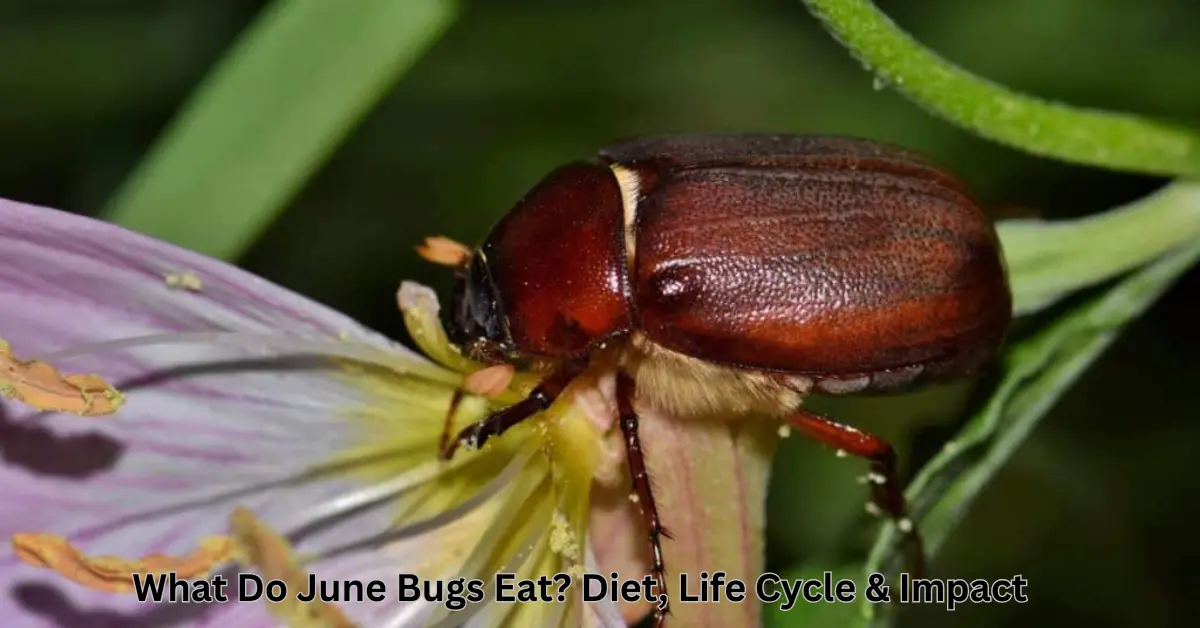
June bugs, also known as June beetles, are fascinating nocturnal insects that belong to the scarab beetle family, Scarabaeidae. These clumsy yet intriguing beetles are easily recognized for their reddish-brown bodies, stout shape, and erratic flight patterns. While June bugs are harmless to humans, their feeding habits—especially in their larval stage—can be a concern for gardeners, farmers, and homeowners.
In this guide, we’ll cover everything you need to know about what June bugs eat, their life cycle, their role in the ecosystem, and how they interact with humans.
Overview of June Bugs
June bugs are generally 0.5 to 1 inch long and have a clumsy flying style. Adults are nocturnal and are often drawn to lights in homes and gardens, making their presence very noticeable during late spring and early summer. There are approximately 300 species of June bugs in the genus Phyllophaga, mostly found in the Americas.
While their adults mostly feed on plant leaves, it is the larvae—known as white grubs—that cause the most significant damage to lawns, gardens, and crops. Despite this, both adults and larvae play a role in enriching ecosystems.
Life Cycle of June Bugs
Understanding their diet requires understanding their life stages:
- Eggs – Female June bugs lay 60–75 eggs in soil near plant roots during midsummer.
- Larvae (White Grubs) – Eggs hatch in 2–3 weeks, and the grubs feed on roots, decaying plant matter, and organic material in the soil. This stage lasts 1–4 years, depending on the species.
- Pupae – After feeding, grubs pupate underground before emerging as adults.
- Adult Beetles – Adults emerge in late spring to early summer, feed on leaves, mate, and lay eggs, continuing the cycle.
Tip: Adult June bugs are harmless to humans, but grubs can damage lawns and crops significantly.
What Do Adult June Bugs Eat?
Adult June bugs are herbivorous and primarily feed on plant foliage. Their diet includes:
- Tree leaves: maple, hickory, oak, and elm
- Garden vegetables: strawberries, potatoes, and other leafy plants
- Flowering plants: rose leaves and other garden shrubs
While adults feed at night, they may occasionally appear during the day if disturbed. Their feeding is usually minor compared to the larvae stage.
What Do June Bug Larvae Eat?
June bug larvae, or white grubs, are more destructive than adults. Their diet consists of:
- Grass roots: leading to brown patches in lawns
- Crop roots: potatoes, corn, and other vegetables
- Organic matter: decomposing leaves and plant debris in soil
White grubs damage lawns and crops by severing roots, which reduces the plant’s ability to absorb water and nutrients. Over time, this can cause the death of affected plants.
Table: Diet of June Bugs by Stage
| Life Stage | Primary Diet | Impact on Humans |
| Egg | N/A | None |
| Larvae (White Grubs) | Grass roots, crop roots, organic matter | Lawn damage, reduced crop yield |
| Adult | Leaves of trees, vegetables, shrubs | Minimal plant damage, nuisance at night |
This table helps quickly identify the dietary habits of June bugs across different life stages.
Why Are June Bugs Considered Pests?
The larval stage is the main reason June bugs are considered pests:
- Lawn Damage – Grubs feed on grass roots, leaving brown patches.
- Crop Damage – Feeding on roots disrupts plant growth and reduces yields.
- Garden Damage – Can harm shrubs, flowers, and ornamental plants.
While adults may nibble on leaves, significant agricultural damage is usually caused by other beetles, such as the Japanese beetle.
Natural Predators of June Bugs
Despite their pest status, June bugs are an important food source for many animals:
- Birds – Robins and crows consume both adults and larvae.
- Mammals – Skunks, raccoons, and moles dig for white grubs.
- Insects – Ground beetles, parasitic wasps, and flies prey on larvae or adults.
For example, the American pelecinid wasp lays eggs on June bug larvae underground, while some flies deposit eggs on adult beetles.
June Bugs and Humans
Interestingly, June bugs are edible for humans. Both adults and grubs contain protein and fat, with grubs considered more nutritious and palatable. In some cultures, insects like June bug larvae are consumed similarly to mealworms or crickets.
Safety Note: Only consume insects that have been sourced safely and prepared hygienically.
How to Identify June Bugs
Adults are easily recognizable:
- Size: 0.5–1 inch long
- Color: Reddish-brown or dark brown
- Body: Stout with tiny bristles on the underside
- Flight: Clumsy, often landing on their backs
Larvae are C-shaped, white, and found underground feeding on roots. Identifying the stage is crucial for managing potential damage.
How to Manage June Bugs
For Gardens and Lawns
- Handpick adults at night using a flashlight.
- Use beneficial nematodes to target larvae in the soil.
- Maintain healthy soil and avoid overwatering lawns, which attracts grubs.
For Crops
- Monitor soil for larvae during midsummer.
- Rotate crops to reduce grub infestations.
- Use organic insecticides if necessary, following safety instructions.
June Bugs and Ecosystem Benefits
Despite their negative impact on lawns and crops, June bugs play important ecological roles:
- Nutrient Recycling – Larvae consume decaying plant material, enriching soil.
- Food Source – Provide protein for birds, mammals, and other insects.
- Pollination – Adults feeding on flowers can contribute to pollination.
Thus, completely eradicating June bugs is not advised; controlled management is the best approach.
Fun Facts About June Bugs
- Nocturnal Fliers – Most active at night and attracted to lights.
- Long Life Cycle – Some larvae live underground for up to 4 years.
- Clumsy Fliers – Adults often land on their backs and struggle to flip over.
- Global Distribution – Found mostly in North and South America but also elsewhere.
Summary
- Adult June bugs feed on leaves and foliage, while larvae feed on roots.
- White grubs are the main pests causing lawn and crop damage.
- June bugs provide ecosystem benefits, including nutrient cycling and serving as prey.
- Management includes manual removal, natural predators, and organic control.
- Both adults and larvae are edible, but grubs are more nutritious.
By understanding what June bugs eat and how they live, gardeners and farmers can protect their plants while appreciating the ecological role these insects play.
Do June bugs bite people?
No, June bugs do not bite people. They are harmless to humans and lack the mouthparts to cause injury. Any contact with humans may feel startling but is completely safe.
Are June bugs good to have around?
Yes, June bugs play a role in enriching ecosystems. Larvae help decompose organic matter and recycle nutrients in the soil. They also provide food for birds, mammals, and beneficial insects.
What is the lifespan of a June bug?
June bugs spend most of their life underground as larvae for 1–4 years. Adults emerge in late spring or early summer and live for a few weeks. The total lifespan depends on the species and environmental conditions.
Why are June bugs bad?
June bug larvae, or white grubs, damage lawns and crops by eating roots. This feeding reduces plant growth, causes brown patches, and can kill plants. Adults can also feed on leaves, though the main problem comes from larvae.