

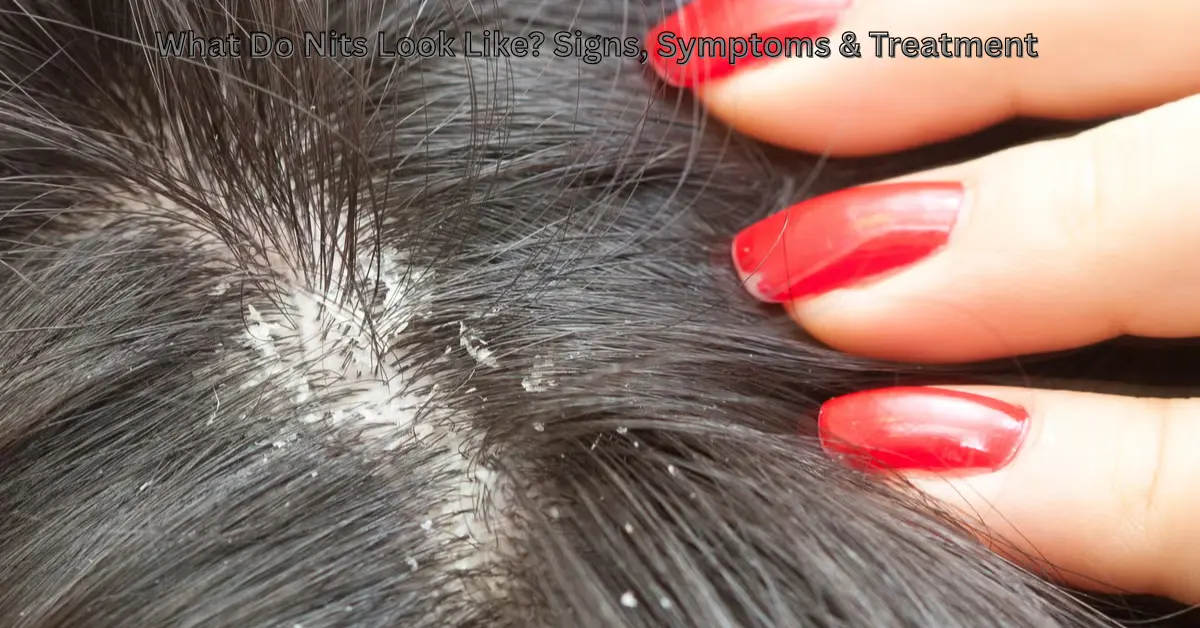
Head lice are tiny, wingless insects that live in human hair and feed on blood from the scalp. While most people notice the itchy scalp first, the real clue that someone has head lice is spotting their eggs, called nits. Understanding what nits look like and how to identify them is crucial for early detection and treatment.
In this guide, we’ll cover everything you need to know about nits: their appearance, life cycle, how they differ from dandruff, treatment methods, home care, prevention tips, and common questions parents ask.
What Are Nits?
Nits are the eggs of head lice (Pediculus humanus capitis). Adult female lice attach these eggs firmly to the hair shafts close to the scalp using a sticky substance. This ensures that the eggs stay in place until they hatch, which usually takes 7–10 days.
Key points about nits:
- Tiny, oval-shaped, and visible with the naked eye or under magnification
- Usually white, yellow, tan, or brown
- Firmly attached to the hair shaft and difficult to remove by simply brushing
Unlike dandruff or hair spray residue, nits cannot be easily flicked off or blown away. They are a clear sign of a head lice infestation.
How Do Head Lice Look?
Before spotting nits, it’s important to recognize adult head lice:
- Size: smaller than a sesame seed (about 2–3 mm long)
- Color: gray, tan, or brown
- Legs: three pairs, claw-like, adapted to grasp hair shafts
- Movement: fast and crawls quickly, making them hard to see
Because adult lice move rapidly, nits are often easier to detect than the live lice themselves. Most commonly, nits are found:
- At the back of the head
- Near the ears
- Along the hairline and crown
Symptoms of Head Lice
Spotting nits is often preceded by symptoms caused by lice feeding:
- Persistent itching on the scalp
- Feeling like something is moving in the hair
- Small red bumps or sores from scratching
- Difficulty sleeping, as lice are more active at night
These symptoms may appear 2–6 weeks after initial infestation, making early detection crucial.
How Do Nits Differ from Dandruff?
Many parents confuse nits with dandruff or hair product residue. Here’s a simple comparison:
| Feature | Nits | Dandruff / Hair Products |
| Attachment | Glued firmly to hair shaft | Loosely attached, flakes off easily |
| Location | Close to scalp (1–2 cm) | Scalp or hair strands |
| Appearance | Oval, white, yellow, or brown | White or gray flakes |
| Removal | Hard to remove without combing | Easily falls off or brushes away |
| Movement | Static until hatched | Does not move |
This table is helpful for parents trying to quickly distinguish nits from harmless flakes.
How Do Nits Spread?
Nits themselves do not jump or crawl — they hatch into lice. However, head lice spread easily in close contact.
Common transmission methods:
- Head-to-head contact during play or school activities
- Sharing combs, brushes, hats, hair ties, or pillows
- Contact with contaminated bedding or furniture, though this is less common
Lice thrive in warm environments near the scalp, which makes children aged 3–12 the most frequent hosts.
The Life Cycle of Head Lice
Understanding the life cycle helps explain why treatment requires multiple steps:
- Egg Stage (Nit): Eggs are laid close to the scalp and glued to hair shafts. Hatch in 7–10 days.
- Nymph Stage: Young lice that have just hatched. They mature in about 7 days.
- Adult Lice: Mature lice lay new eggs and continue the cycle. Adults live about 30 days on the scalp.
Interrupting this life cycle is key to successfully eliminating an infestation.
How to Identify Nits
To check for nits:
- Wet the hair and apply conditioner to slow down lice movement.
- Use a fine-toothed lice comb from scalp to hair tips.
- Inspect the comb or hair strands after each pass.
- Look for tiny oval eggs firmly attached to the hair shaft.
Tips for accurate detection:
- Focus on the back of the head and behind the ears
- Use good lighting or a magnifying glass
- Repeat combing every few days for 2–3 weeks
Treatment Options
Treating nits requires both killing adult lice and removing eggs.
Medicated Treatments
Common options include:
- Permethrin lotion (Nix®) – kills live lice, may require repeat application
- Pyrethrin + Piperonyl Butoxide (RID®) – plant-based, effective against lice
- Spinosad topical suspension (Natroba®) – kills lice and many eggs
- Ivermectin lotion (Sklice®) – prescription-only for resistant infestations
Manual Removal
- Fine-toothed nit combing removes lice and nits
- Apply conditioner or special lice combing solutions for better results
- Repeat combing every 2–3 days for at least 2 weeks
Home Care After Lice
To prevent re-infestation:
- Wash clothing, bedding, and hats in hot water and dry on high heat
- Vacuum furniture and floors to remove stray hairs with eggs
- Store items that cannot be washed in sealed plastic bags for 2 weeks
- Clean combs and brushes in hot water or lice-killing solution
Remember, lice cannot survive off the scalp for more than 1–2 days, so home cleaning is important but does not need to be extreme.
Prevention Tips
Preventing nits and lice is easier than treating them:
- Avoid head-to-head contact during play
- Do not share combs, hats, or pillows
- Check children regularly during outbreaks at school
- Treat all infested household members simultaneously
Early detection prevents larger outbreaks and reduces school or daycare transmission.
When to See a Healthcare Provider
Call your child’s healthcare provider if:
- Over-the-counter treatments fail
- Scratching leads to sores, redness, or pus
- Fever develops or scalp pain persists
A professional can provide prescription treatments or guidance for persistent infestations.
FAQ About Nits and Head Lice
| Question | Answer |
| How long can head lice live off the host? | Adult lice live 1–2 days without a scalp; nits survive about 10 days. |
| Do head lice carry diseases? | No, head lice are mostly harmless but can cause bacterial infections from scratching. |
| Can adults get head lice? | Yes, but they are less common; transmission occurs through close contact. |
| How often should you check for nits? | Check at least once a week during outbreaks or if itching develops. |
| Can nits be removed without combing? | Manual removal with a fine-toothed comb is the most effective method. |
| When can kids return to school? | Usually immediately after treatment, but notify school to prevent spread. |
Key Takeaways
- Nits are small, oval eggs attached to hair shafts near the scalp.
- They differ from dandruff because they cannot be easily brushed off.
- Detection requires wet combing and careful inspection.
- Treatment combines medicated shampoos and manual combing.
- Home cleaning and prevention reduce re-infestation risks.
Head lice are common, treatable, and usually harmless, but early detection and careful treatment are essential to stop them from spreading. By knowing what nits look like and following proper care routines, you can protect your child and household from lice infestations.
What could be mistaken for a nit?
Dandruff, hair spray residue, or hair flakes can look like nits. These are loosely attached and fall off easily when brushed. Nits, in contrast, are glued firmly to hair shafts and stay in place.
Do nits go away by themselves?
No, nits do not go away on their own. They remain attached to hair until manually removed or killed by treatment. Without intervention, they hatch into lice and continue the infestation cycle.
What do the beginning stages of head lice look like?
In the early stages, lice are tiny nymphs, almost invisible to the naked eye. They appear translucent or light-colored and move quickly in the hair. You may only notice mild itching or small nits close to the scalp.
What are the first signs of head lice?
The earliest signs include persistent itching on the scalp. You may feel like something is crawling in the hair. Small red bumps or sores from scratching can also appear.
Can lice live on pillows?
Lice cannot survive long off the human scalp, usually only 1–2 days. However, they can temporarily attach to pillows if an infested person uses them. Frequent washing and avoiding sharing pillows help prevent spread