
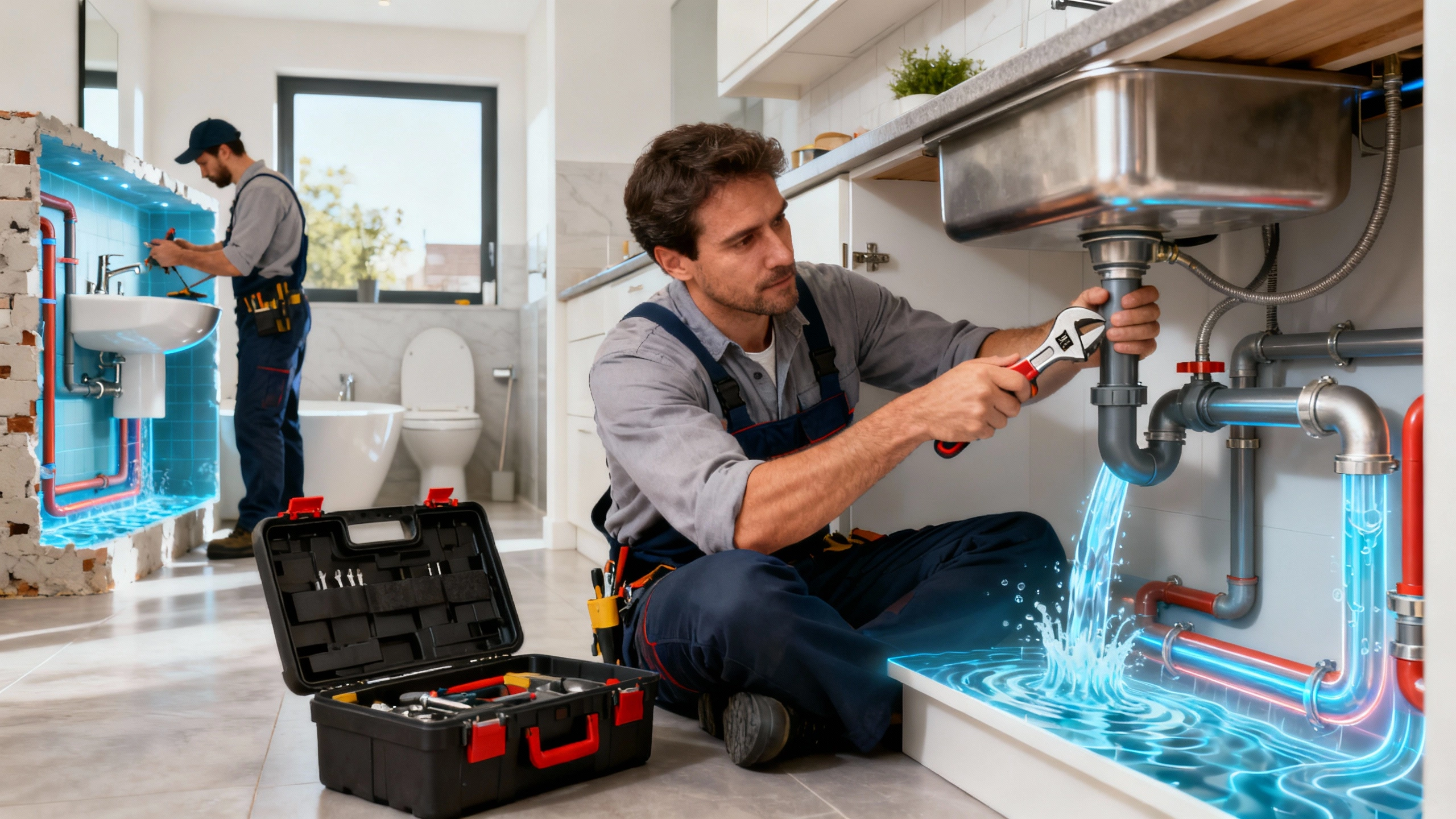
Plumbers play a crucial role in keeping our homes, workplaces, and public spaces running smoothly. From installing pipes to fixing leaks, their work ensures clean water, proper sanitation, and functional drainage systems. If you’ve ever wondered what plumbers actually do, this guide will give you a clear understanding of their tasks, tools, skills, and where they typically work.
Who is a Plumber?
A plumber is a skilled professional who installs, repairs, and maintains systems that involve water, gas, and waste. They work in residential, commercial, and industrial settings, ensuring that pipes, fixtures, and appliances operate safely and efficiently.
Plumbers often specialize in different areas, such as:
- Residential plumbing – homes and apartments
- Commercial plumbing – offices, restaurants, and stores
- Industrial plumbing – factories and large-scale facilities
Key Responsibilities of a Plumber
Plumbers handle a wide range of tasks. Their day-to-day responsibilities can include:
- Installing and repairing pipes – for water, gas, and sewage systems.
- Fixing leaks and clogs – stopping water damage and restoring proper flow.
- Installing fixtures and appliances – sinks, toilets, showers, water heaters, and dishwashers.
- Maintaining plumbing systems – inspecting pipes, replacing worn-out components, and testing for leaks.
- Ensuring code compliance – following safety and building regulations.
Tools Plumbers Use
Plumbers rely on a variety of tools to do their jobs efficiently and safely. Some common tools include:
- Pipe wrenches
- Plungers
- Pipe cutters
- Tape measures and levels
- Plumbing snakes and augers
- Pressure gauges
- Soldering equipment for metal pipes
Signs You Might Need a Plumber
Knowing when to call a plumber can save your property from serious damage. Common signs include:
- Leaking pipes – water stains, puddles, or damp walls
- Low water pressure – unusually slow flow from taps or showers
- Clogged drains – toilets, sinks, or showers draining slowly
- No hot water – issues with water heaters or boilers
- Strange noises – gurgling, banging, or hissing in pipes
Plumbing Work Examples
Here are some practical examples of plumbing tasks:
- Residential: Replacing a broken faucet, unclogging a kitchen sink, installing a new water heater.
- Commercial: Installing piping for a restaurant kitchen, fixing leaks in a hotel plumbing system.
- Industrial: Repairing large-scale water supply pipelines, installing industrial boilers.
Where Plumbers Can Be Found or Work
Plumbers don’t “live” like animals, but they can be found working in:
- Homes and apartments – for maintenance, repairs, or renovations
- Office buildings and commercial spaces – ensuring proper sanitation and water systems
- Factories and plants – maintaining industrial piping and machinery
- Construction sites – installing new plumbing systems
- Municipal facilities – maintaining public water supply and sewage systems
Plumbers often travel between sites, carrying their tools and equipment, and sometimes working in tight, challenging spaces like crawl spaces or basements.
Tips for Hiring or Working with a Plumber
- Check credentials – ensure they are licensed and insured.
- Ask for estimates – get multiple quotes to compare pricing.
- Look for experience – specialized plumbing tasks may require years of expertise.
- Schedule regular maintenance – prevent problems before they become expensive repairs.
FAQ – Common Questions About Plumbers
Q1: How much does a plumber cost?
A: Prices vary based on location, job complexity, and emergency services. Hourly rates typically range from $50–$150.
Q2: Can plumbers handle gas lines?
A: Yes, but only licensed plumbers or specialists trained in gas systems. Handling gas without proper training is dangerous.
Q3: How often should plumbing systems be checked?
A: Annual inspections are recommended, especially for older homes or complex systems, to prevent leaks and water damage.