

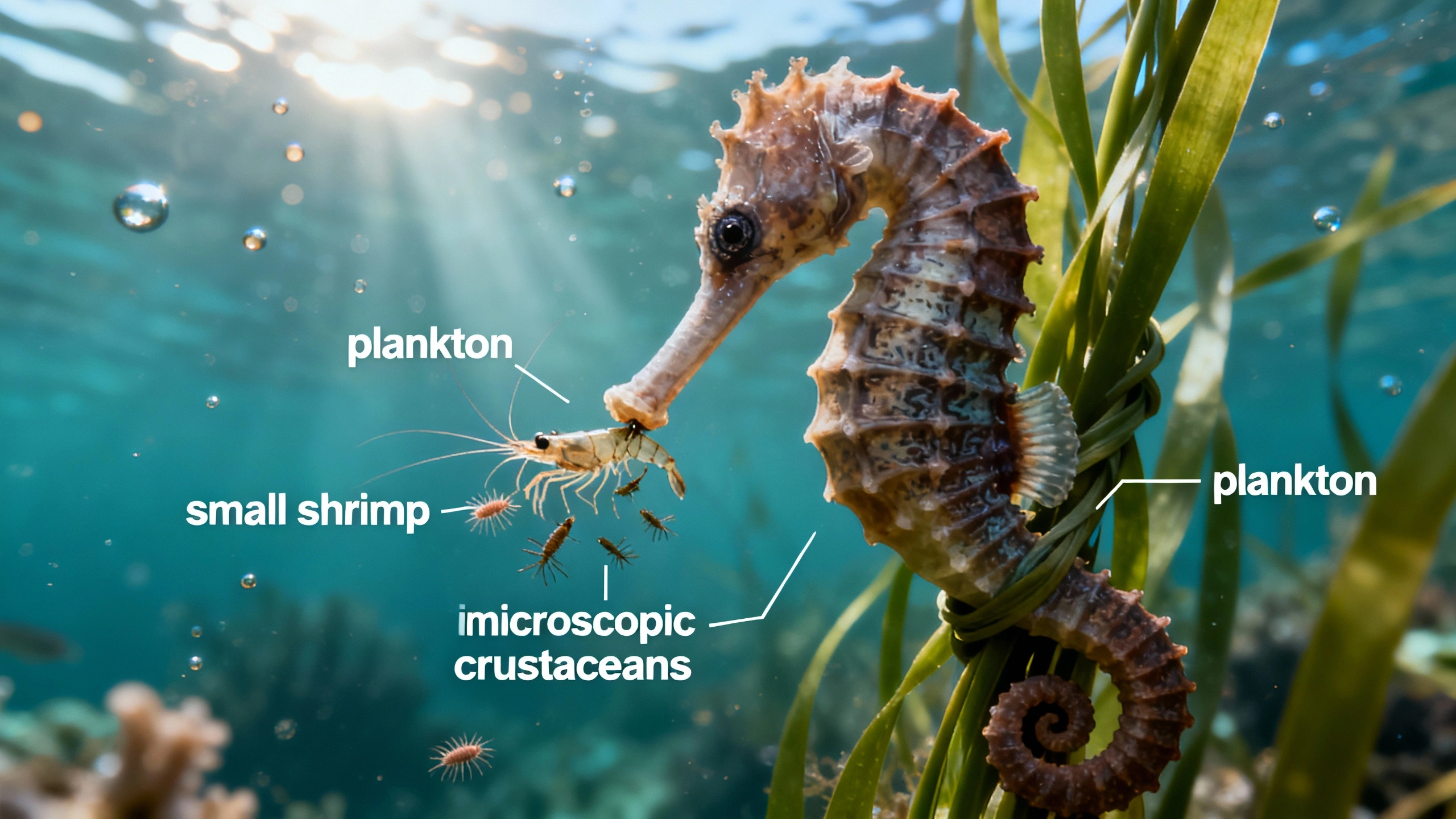
Seahorses are fascinating and unique marine creatures, admired for their delicate appearance, upright swimming posture, and unusual reproductive behavior. Understanding their diet is essential for anyone studying marine life, keeping them in aquariums, or simply curious about ocean ecosystems. This guide explains exactly what seahorses eat, how they feed, and the environments they thrive in.
Introduction to Seahorse Feeding Habits
Seahorses belong to the genus Hippocampus and are closely related to pipefish. Despite their slow swimming style, they are skilled predators. Unlike many fish, seahorses do not have teeth or a stomach. This unique anatomy impacts their diet and feeding habits significantly:
- No stomach: Food passes quickly through their digestive system, so they must eat almost constantly.
- Small mouths: They use their tubular snouts to suck in tiny prey with precise, rapid movements.
- Ambush predators: Seahorses typically anchor themselves to seagrass or coral and wait for prey to come close.
What Seahorses Eat
Seahorses are carnivorous, feeding mainly on small, slow-moving organisms. Their diet includes:
- Live or frozen brine shrimp: This is one of the most common foods for seahorses in aquariums.
- Copepods and amphipods: Tiny crustaceans found in marine environments.
- Mysis shrimp: Often used as a staple in captive diets.
- Small planktonic organisms: Including baby fish and tiny invertebrates.
- Larvae and baby crustaceans: They rely heavily on these for growth and energy.
Feeding Tips for Captive Seahorses:
- Offer live or frozen prey for better nutrition.
- Feed multiple times a day, as they digest quickly.
- Ensure prey is small enough to fit into their snout.
How Seahorses Eat
Seahorses employ a method called “pipette suction feeding”:
- They stealthily approach their prey, often while anchored to a plant or coral.
- With a sudden flick of their head, they create suction and draw the prey directly into their tubular snout.
- Swallowing is almost instantaneous because they lack teeth and a stomach.
Visual cues for feeding:
- Seahorses often sway gently in the water before striking.
- They may lean into a food source with their tails anchored.
- Quick head movements indicate successful prey capture.
Where Seahorses Can Be Found or Live
Seahorses inhabit shallow coastal waters, often in regions with plenty of hiding spots. Common habitats include:
- Seagrass beds: Provide camouflage and anchor points.
- Mangroves: Offer abundant small prey and protection from predators.
- Coral reefs: Rich in tiny crustaceans and plankton.
- Estuaries and bays: Mild waters with slower currents are ideal for feeding.
Seahorses are distributed worldwide, mostly in tropical and temperate waters, including the Indo-Pacific, Atlantic coasts, and Mediterranean Sea.
Signs of Healthy Eating in Seahorses
To ensure seahorses are well-fed, watch for these signs:
- Active feeding behavior multiple times per day.
- Upright posture while swimming or hovering.
- Slightly rounded body indicating energy storage.
- Regular defecation, which is quick and frequent due to the lack of a stomach.
Warning Signs of Poor Nutrition:
- Sunken belly or bony appearance.
- Lethargy or unusual hiding.
- Refusal to eat or slow strikes at prey.
Tips for Feeding Seahorses in Captivity
- Use feeding tongs: Direct food to their snouts if they struggle to catch prey.
- Keep water clean: Uneaten food can foul the tank and harm delicate seahorses.
- Avoid large prey: Their mouths are small; oversized food can cause choking.
- Feed frequently: Small meals 2–3 times daily work best for health.
FAQ About Seahorse Diet
1. Can seahorses eat frozen food?
Yes! Frozen brine shrimp or mysis shrimp are commonly used, but live food often encourages more natural feeding behavior.
2. How often should seahorses eat?
Due to their fast digestion, they should eat multiple times a day, usually 2–3 times in captivity, or continuously in the wild.
3. Do seahorses eat algae or plants?
No. Seahorses are strictly carnivorous and rely on tiny live prey for nutrients.
Conclusion
Seahorses may appear delicate, but they are skilled predators adapted to a diet of small crustaceans and plankton. Understanding their feeding habits is essential for keeping them healthy in captivity and conserving them in the wild. Frequent, small meals, appropriate prey size, and suitable habitats ensure these charming fish thrive.