

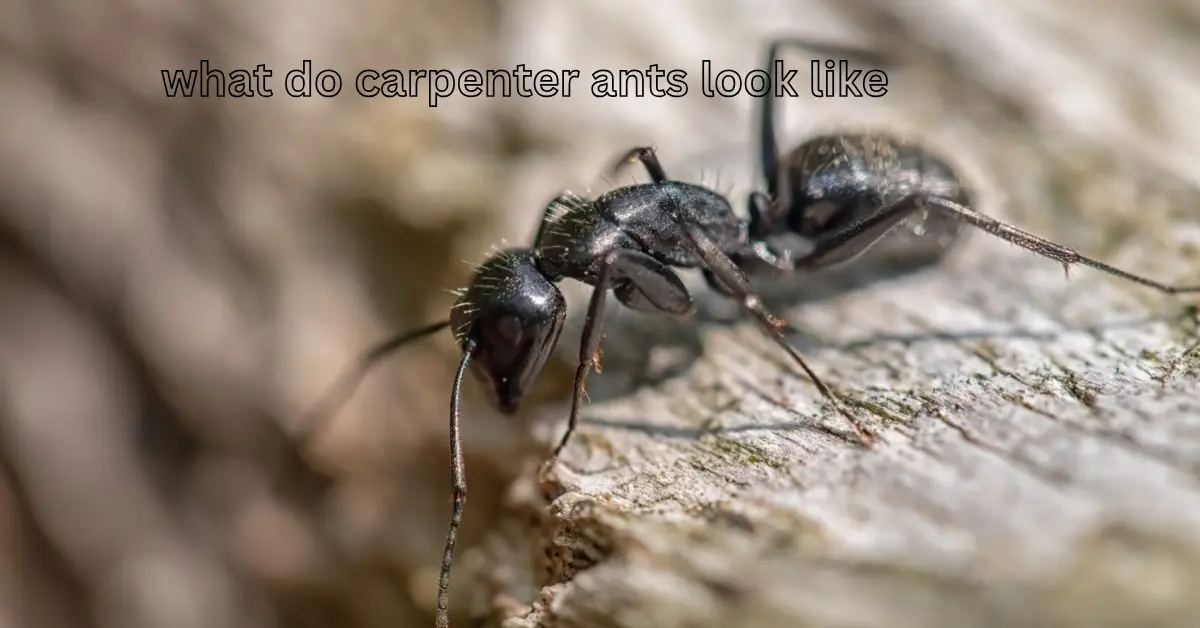
Carpenter ants (Camponotus spp.) are among the largest ants found in North America. These impressive insects are known for their shiny black or red bodies and their ability to damage wood in homes and gardens. While they do not eat wood like termites, carpenter ants hollow it out to build nests, making them a structural threat if left unchecked.
Understanding what carpenter ants look like is essential for homeowners, gardeners, and pest control enthusiasts. In this guide, we will cover how to identify carpenter ants, differences from other ants and termites, their life cycle, habitats, and tips for controlling them effectively.
How to Identify Carpenter Ants
Identifying carpenter ants is easier than you might think if you know what characteristics to look for:
- Size: Carpenter ants are larger than most ants, ranging from ¼ inch to ½ inch in length, with queens reaching up to one inch.
- Color: Most carpenter ants are black, though some species, like Camponotus chromaiodes, have reddish-brown bodies.
- Body Shape: They have a rounded thorax and a pinched waist. Unlike termites, their antennae are elbowed.
- Hairs: Many species have tiny yellowish-white hairs on their abdomen, which may appear as faint stripes.
- Wings: Queens have wings initially but lose them after mating. Male reproductives keep their wings until death.
Carpenter Ants vs Other Ants
Carpenter ants are often confused with other ant species, including odorous house ants and fire ants. Understanding these differences helps prevent misidentification:
- Odorous House Ants: Small (⅛ inch), dark brown to black, smell like rotten coconut when crushed, do not damage wood.
- Fire Ants: Smaller, reddish, aggressive stingers, typically live outdoors and build mounded nests.
Table: Carpenter Ants vs Common Ants
| Feature | Carpenter Ants (Camponotus spp.) | Odorous House Ants (Tapinoma sessile) | Fire Ants (Solenopsis invicta) |
| Size | ¼–½ inch (queens up to 1 inch) | 1/16–1/8 inch | 1/8–¼ inch |
| Color | Black or red | Dark brown/black | Reddish |
| Waist | Pinched | Single node | Single node |
| Antennae | Elbowed | Elbowed | Elbowed |
| Wood Damage | Yes | No | No |
| Odor when crushed | Mild or none | Rotten coconut | Strong chemical |
Carpenter Ants vs Termites
Carpenter ants and termites are both wood-destroying pests, but they differ significantly:
- Diet: Carpenter ants do not eat wood; they tunnel to create nests. Termites consume cellulose in wood.
- Body Structure: Carpenter ants have pinched waists and elbowed antennae; termites have thick waists and straight antennae.
- Wings: Termite wings are longer than their bodies; carpenter ant wings are proportional to their size.
- Lifespan: Carpenter ant queens live up to 10 years, males die after mating; termite queens can live 30 years.
Life Cycle of Carpenter Ants
Carpenter ants undergo four stages of development: egg → larva → pupa → adult.
- Eggs: Tiny and white, laid in moist wood or soil.
- Larvae: Soft, white, and grub-like, feeding on regurgitated food from worker ants.
- Pupae: Encased in a cocoon, transforming into adult ants.
- Adults: Worker ants gather food, care for larvae, and maintain the nest; queens focus on reproduction.
Where Do Carpenter Ants Live?
Carpenter ants are most commonly found in the northeastern United States, but certain species, like the red carpenter ant, inhabit much of the eastern U.S. They prefer:
- Moist or decaying wood in homes, decks, and window frames.
- Natural habitats like hollow trees, stumps, and logs.
- Parent and satellite colonies: Parent colonies house the queen, while satellite colonies spread throughout the area for expansion.
What Do Carpenter Ants Eat?
Carpenter ants are omnivorous and have a varied diet:
- Sugary substances: Honeydew from aphids, fruits, nectar.
- Protein: Dead insects, small animals, and other invertebrates.
- Occasional food inside homes: Pet food, sweet beverages, or crumbs.
Even though they do not consume wood, their tunneling into wood allows them to create safe nests while feeding on protein and sugar sources nearby.
Signs of Carpenter Ant Infestation
Detecting carpenter ants early can save your home from damage. Look for:
- Frass: Sawdust-like material ejected from holes in wood.
- Noisy nests: Worker ants are active inside walls, sometimes audible.
- Visible ants: Especially at night or during warmer months.
How Carpenter Ants Move
Carpenter ants are agile walkers and climbers:
- They use their legs and claws to scale vertical surfaces like walls and tree bark.
- Queens initially fly during mating swarms but lose wings afterward.
- Workers can travel long distances from the nest in search of food.
Control and Prevention
If you suspect a carpenter ant infestation:
- Inspect: Check for frass, holes, or nesting wood.
- Eliminate moisture: Repair leaks and ensure proper ventilation.
- Seal entry points: Caulk gaps, windows, and doors.
- Professional help: Pest control services can identify species and eliminate colonies safely.
Conclusion
Carpenter ants are fascinating and resilient insects, with distinct physical features and behaviors that differentiate them from other ants and termites. While they do not eat wood, their nesting habits can cause structural damage, making early detection crucial. By recognizing their appearance, understanding their life cycle, and implementing preventive measures, you can protect your home from potential infestations.
Whether black or red, large or small, identifying carpenter ants early is the first step to keeping your home and property safe. When in doubt, contacting a professional pest control service ensures proper handling and eradication.
1. How do you know if it’s a carpenter ant?
You can identify a carpenter ant by its large size, ranging from ¼ to ½ inch. Its body is usuallyblack or red with a pinched waist and elbowed antennae. Look for sawdust-like frass or small holes in wood near their nests.
2. How do you get rid of carpenter ants?
First, locate their nest and remove any moisture sources around it. Use bait, insecticide sprays, or call a professional pest control service to eliminate the colony. Seal cracks and entry points to prevent future infestations.
3. Do carpenter ants bite?
Yes, carpenter ants can bite humans if provoked. Their bites are not venomous but can be painful and may cause minor irritation. They usually bite to defend themselves or protect their nest.
4. Are carpenter ants bad to have around?
Yes, carpenter ants can damage wood by hollowing it out to build nests. While they do not eat wood, this tunneling weakens structures over time. Having them around can lead to costly repairs if infestations are left untreated.